Skip to content

Why We Don’t Hire “IT Guys”

The Industry Has a Talent Problem Nobody Talks About

There’s an uncomfortable truth in the managed IT industry: most of the people working on your systems were never tested on whether they could explain what they’re doing or why it matters to your business.

The standard hiring process at most MSPs looks something like this. Post a job listing for an “L3 technician.” Screen for certifications. Ask some technical trivia. If they can talk about Active Directory and know what a VLAN is, they’re in.

That person might be perfectly competent at closing tickets. They can reset passwords, restart services, and follow runbooks. But put them in a room with your CEO during a network outage, and they freeze. Ask them to explain why a cloud migration decision affects your compliance posture, and you get jargon. Ask them to prioritize between three simultaneous emergencies across different clients, and they default to whoever called last.

This is not a criticism of those individuals. It’s a criticism of the hiring model. The MSP industry has normalized the idea that technical skill alone is enough. It isn’t. Not when the person working on your firewall needs to understand your business, not just your network topology.

What the Industry Calls “L3” and What We Call a Senior Consultant

The MSP world uses a tiered system. Level 1 handles basic tickets. Level 2 takes escalations. Level 3 handles the complex stuff. The assumption is that each level just requires more technical depth.

At BALANCED+, we rejected that assumption.

We don’t hire “L3 technicians.” We hire Senior Consultants. The distinction isn’t semantic. It reflects a fundamentally different expectation for what a technical professional should be capable of.

A technician follows a script. A consultant understands the situation, communicates clearly, makes judgment calls, and takes ownership of outcomes. A technician fixes the problem in front of them. A consultant asks whether the problem should have existed in the first place and what needs to change so it doesn’t come back.

When we built our hiring process, we started with a simple question: what does our client actually experience when one of our people shows up? They don’t experience certifications or resume bullet points. They experience a human being who either makes them feel confident or makes them feel nervous. Who either explains things clearly or hides behind jargon. Who either understands the business impact of a technical decision or treats every issue like an isolated ticket.

That experience is what we hire for.

We Test for Business Thinking, Not Just Technical Knowledge

Our interview process has a section we call “The Balanced Consultant.” It comes before any technical questions. That’s intentional.

We put candidates into real scenarios drawn from our actual client base. A financial services client in downtown Toronto is skeptical about moving sensitive data to the cloud. How do you explain the security benefits without using technical jargon? Your client’s internet is down, the CEO is losing money, and the problem is an ISP outage you cannot fix. How do you handle that conversation? You’re juggling three critical issues at once across different clients. How do you prioritize, and who do you communicate with first?

These aren’t trick questions. They’re Tuesday afternoon at BALANCED+.

We’re listening for something specific: can this person bridge the gap between what’s happening technically and what it means for the business? Can they stay calm under pressure? Can they take a frustrated executive from panic to confidence, even when the news isn’t good?

A candidate who gives a technically perfect answer but can’t communicate it to a non-technical decision maker doesn’t pass. A candidate who handles the people side beautifully but doesn’t have the technical foundation to back it up doesn’t pass either. We need both, because our clients need both.

Technical Depth Across the Full Stack

The consulting mindset matters, but it has to sit on top of genuine technical mastery. We don’t hire generalists who know a little about everything.

Our technical evaluation covers the specific technologies our clients depend on. Azure cloud architecture, not just “do you know what Azure is” but “a client’s bill spiked 40% last month, walk me through how you investigate and what quick wins you look for.” Microsoft 365 security and migration, not just “have you used Exchange” but “you’re migrating a 200-user law firm with massive mailboxes and zero tolerance for downtime, what’s your strategy and why?”

We test Fortinet firewall architecture, VLAN design for real-world scenarios like isolating manufacturing floor IoT devices from a finance network, backup and disaster recovery strategy when ransomware has already encrypted the local backups, and hybrid identity troubleshooting when password sync failures are locking users out of Teams.

Every question is scenario-based. We don’t ask candidates to recite definitions. We put them in situations our clients actually face and evaluate whether they can think architecturally, not just procedurally.

We also watch for what we call “red flags,” the difference between someone who understands systems at a deep level and someone who has memorized surface-level answers. When a candidate says “just restore from backup” after a ransomware attack without considering whether replication will overwrite the restore, that tells us everything we need to know. When someone can explain IOPS and latency to a non-technical client using a simple analogy instead of rattling off specs, that tells us something too.

The Whiteboard Test

The final stage of our technical interview is a whiteboard scenario. No scripts. No Googling. Just a real-world problem, a marker, and a blank board.

Here’s a version of what that looks like: a manufacturing client has two physical sites connected by a site-to-site VPN. When the internet at head office goes down, users at the factory can’t log in to their computers or access files. Why is this happening? Draw the architecture. Propose a fix so the factory can operate independently when the head office connection drops.

This is where we separate consultants from technicians.

A technician might identify that authentication is failing. A consultant diagnoses that the factory lacks a local domain controller, maps out the full dependency chain, proposes both an on-prem fix and a cloud-based alternative, and then, this is the part that matters most, asks clarifying questions before drawing anything. They want to understand the client’s priorities, constraints, and budget before proposing a solution.

That instinct to ask before answering is what makes someone a consultant. It’s also what makes them trustworthy in front of your leadership team.

Why This Should Matter to You

You probably don’t think much about how your IT provider hires. Most business owners don’t. You evaluate the service, not the process behind it.

But consider what’s actually at stake. The person who manages your firewall determines whether your network is secure or just appears to be. The person who migrates your email determines whether your data is protected during the transition or exposed. The person who answers your 2 AM emergency call determines whether a minor incident stays minor or spirals into a business continuity crisis.

These aren’t abstract risks. They’re the scenarios that keep business owners up at night. And in every single one, the outcome depends less on the technology and more on the person operating it.

When that person was hired because they checked certification boxes and answered trivia questions correctly, you get a certain level of service. When that person was hired because they demonstrated the ability to think architecturally, communicate clearly, stay calm under pressure, and connect technical decisions to business outcomes, you get a fundamentally different experience.

Every senior consultant at BALANCED+ went through this process. Every one of them was tested on their ability to sit across from a client, understand the real problem, and deliver a solution that makes sense technically and strategically. That’s not an accident. It’s a deliberate investment in the people who stand behind every ticket, every project, and every recommendation we make.

The People Behind the Technology

It’s easy to evaluate an MSP based on the tools they use, the certifications they hold, or the price on the proposal. Those things matter. But they’re not what determines whether your technology actually serves your business.

What determines that is the person who picks up the phone. The person who walks into your office. The person who makes the judgment call at 2 AM when something breaks and nobody is watching.

We built our hiring process around a belief that’s simple but rarely practiced in this industry: the people behind the technology matter as much as the technology itself. That’s why we don’t hire IT guys. We hire consultants who happen to be deeply technical.

If you’re curious about the team behind BALANCED+, or want to understand how our consultants work with businesses like yours, we’d welcome the conversation.

Learn more about the BALANCED+ team and approach

What SMBs Get Wrong About Fortinet Renewals

The email arrives from your vendor or distributor. Your Fortinet renewal is coming up. Someone on your team forwards it with a note: “Can we just renew what we have?”

It feels like a simple question. You already have a setup that works. The renewal quote looks similar to last time. Approving it takes five minutes and gets it off your plate.

So you sign. And in doing so, you’ve just made one of the most consequential technology decisions of the year while treating it like a routine purchase order.

Fortinet renewals aren’t paperwork. They’re decision points that determine what your firewall can actually do, what it can’t protect you from, and whether you’re spending your security budget where it matters most. The problem is that most businesses don’t realize this until something goes wrong.

The Auto-Renew Trap

The most common approach to Fortinet renewals is also the most dangerous: just renew what you had before.

It makes sense on the surface. You bought this configuration for a reason. Your IT person set it up. Things have been working. Why change anything?

Because everything around that configuration has changed, even if the firewall itself hasn’t.

When you originally purchased your Fortinet setup, your business looked different. You probably had fewer employees, fewer remote workers, fewer cloud applications, and fewer compliance obligations. The threat landscape was different. Your bandwidth requirements were different. Your insurance carrier may not have been asking questions about your security posture yet.

“Same as last time” assumes that none of this matters. It assumes that the licensing bundle you chose three years ago still aligns with how your business operates today. It assumes that the hardware you’re running can still handle the inspection and filtering workload your network actually demands.

That assumption goes unchallenged because nobody on your team has a reason to question it. Your IT person wants the firewall to keep working. Your vendor wants the renewal to go through. You want one less thing to think about. Everyone’s incentives point toward the path of least resistance.

And that path often leads to paying for capabilities you don’t use while lacking protections you actually need.

The Licensing Confusion Nobody Talks About

Fortinet’s licensing model is not simple. It wasn’t designed to be. It was designed to be flexible, which is valuable for organizations with dedicated security teams who can evaluate each component. For an SMB owner or a solo IT person juggling twenty other priorities, “flexible” often translates to “confusing.”

There’s the hardware itself. There are FortiGuard subscription bundles that provide threat intelligence, web filtering, antivirus, intrusion prevention, and other security services. There are individual subscription add-ons. There are support tiers that determine what level of help you can get when something breaks.

Most businesses don’t know exactly what they’re paying for within their renewal quote. They see a total number and either approve it or negotiate the price down without questioning what’s actually included.

This creates two problems that look very different but stem from the same root cause.

The first is overpaying. You might be renewing subscriptions for features your firewall hardware doesn’t have the processing power to run effectively. You might be paying for overlapping capabilities because nobody audited what you’re already getting from other tools in your security stack. You might be carrying premium support when standard support would cover your actual needs.

The second is under-protection. You might be missing critical security subscriptions because they weren’t included in your original bundle and nobody revisited the decision. You might have advanced threat protection on paper but lack the hardware performance to run deep inspection on encrypted traffic without crippling your network. You might be renewing a configuration that was right-sized for a 25-person office and running it for a 60-person hybrid workforce.

The licensing complexity isn’t malicious. But it does mean that a renewal treated as routine almost certainly results in a mismatch between what you’re paying for and what you actually need.

Timing Mistakes That Cost More Than You Think

Even businesses that pay attention to what they’re renewing often stumble on when they renew.

Renewing too late creates obvious problems. If your FortiGuard subscriptions lapse, your firewall stops receiving threat intelligence updates. It stops checking traffic against current malware signatures. It stops filtering against updated threat databases. The hardware still runs. The lights still blink. But the security services that make it useful go dark. And the gap between your subscription expiring and your renewal processing is a window where your network is genuinely less protected.

If your business operates under compliance requirements, a lapsed subscription isn’t just a security risk. It’s a documentation gap. When an auditor asks whether your firewall’s threat protection was continuously active for the past twelve months, a lapse creates a finding. When your cyber insurance carrier asks the same question during a claim, the answer could determine whether they pay.

Renewing too early has a different cost. If you lock in a renewal months ahead without evaluating whether your current configuration still fits, you’ve committed budget before doing the analysis. If your business has grown, if your compliance landscape has shifted, if your hardware is approaching end of life, you may have just renewed subscriptions on a platform that needs to be replaced entirely.

The worst timing mistake is the one that combines both problems: renewing expensive subscriptions on hardware that’s already past or approaching end of support. You’re paying for security services running on a device that Fortinet is no longer patching. The subscriptions are current. The platform underneath them is frozen.

When Your Renewal Doesn’t Match Your Business Anymore

Businesses change faster than their IT infrastructure, and Fortinet renewals often expose just how wide that gap has become.

The company that bought a FortiGate three years ago for a team of 30 people working in one office may now have 55 employees, a third of whom work remotely at least part of the time. The VPN capacity that was adequate is now a bottleneck. The bandwidth allocation that worked when cloud tools were supplementary now chokes under the load of Teams calls, cloud-based ERPs, and SaaS platforms that didn’t exist in the original design.

The compliance landscape has shifted too. Three years ago, your customers may not have asked about your security controls. Your insurance carrier may not have cared about your firewall’s patch status. Ontario’s regulatory environment around data protection wasn’t generating the same pressure it does today. If your Fortinet configuration hasn’t evolved alongside those requirements, your renewal is preserving a gap, not closing one.

Even the threat environment has moved. The types of attacks that FortiGuard services protect against have changed significantly. Encrypted threat traffic has increased dramatically. Application-layer attacks are more sophisticated. The inspection capabilities your business needed in 2022 are not the same capabilities you need in 2026.

A renewal that simply replicates your existing configuration is a statement that nothing in your business, your industry, your compliance landscape, or the threat environment has changed. For most SMBs in the GTA, that statement simply isn’t true.

The Questions You Should Be Asking (But Probably Aren’t)

The gap between a routine renewal and a strategic one comes down to whether anyone is asking the right questions before the quote gets approved.

Do you know what each line item on your Fortinet renewal quote actually does? Not what the label says, but what it means for your daily operations and security posture. If someone on your team can’t explain in plain language what you’re getting for each dollar, the renewal is being approved on faith.

Has anyone checked whether your current hardware can actually run the services you’re renewing at full capacity? A firewall subscription is only as good as the device running it. If your FortiGate is throttling inspection to keep up with traffic, you’re paying for security capabilities that aren’t fully active.

When was the last time someone compared your subscription bundle to your actual security requirements? Not the requirements you had when you first purchased, but the requirements your business faces right now, including what your customers are asking for, what your insurance carrier expects, and what your IT roadmap actually demands.

Has anyone evaluated whether your renewal would be better spent on right-sizing your entire Fortinet deployment rather than extending a configuration that no longer fits? Sometimes the smartest move isn’t renewing at all. It’s stepping back and asking whether the foundation still supports the building you’ve constructed on top of it.

If the answer to most of these is “no” or “I’m not sure,” you’re in good company. Most SMBs treat Fortinet renewals as administrative, not strategic. But the businesses that get the most out of their security investment are the ones that treat renewal season as a checkpoint, not a checkbox.

Rethinking the Renewal

A Fortinet renewal landing in your inbox should feel less like an invoice and more like a prompt. It’s a built-in opportunity to assess whether your security spending is aligned with your business reality, or whether you’re funding a configuration that served a version of your company that no longer exists.

This isn’t about making renewals complicated. It’s about recognizing that a five-minute approval on a misaligned configuration carries real consequences: money spent on the wrong things, gaps left in the wrong places, and compliance exposure that accumulates quietly until it matters loudly.

Your Fortinet investment should reflect the business you’re running today, not the business you were running when someone first set it up. The renewal is the moment to make sure it does.

Learn More About Managing Your Fortinet Investment

If your next Fortinet renewal is approaching and you’re not confident that your current configuration still matches your business needs, that’s worth exploring. Learn more about how managed Fortinet firewall services help businesses align their security investment with their actual requirements.

What Is SAMI? And How Does it Benefit Your Business?

You’ve invested in a firewall. You’ve got endpoint protection. Maybe you’ve even run a penetration test in the last year or two. On paper, it looks like you’re covered.

But here’s the question most business owners and IT managers don’t ask often enough: how much of your security is based on what already happened versus what’s happening right now?

Most cybersecurity tools are designed to detect and respond. Something triggers an alert, someone investigates, and the team reacts. That model worked when threats moved slowly and attackers followed predictable patterns. That’s not the world we’re operating in anymore. Attacks are faster, more automated, and increasingly targeting the gaps between your tools rather than the tools themselves.

The businesses that are getting ahead of this aren’t necessarily spending more. They’re shifting from a reactive model to a continuous one. That’s where Continuous Threat Exposure Management comes in, and it’s why platforms like SAMI are gaining serious traction.

Why Reactive Cybersecurity Isn’t Enough Anymore

The traditional approach to cybersecurity follows a familiar cycle. You deploy tools, configure them, and wait. When something goes wrong, you respond. Between incidents, you might run a quarterly vulnerability scan or an annual penetration test to check for gaps.

The problem is what happens in between those checkpoints.

Threat actors aren’t waiting for your next scheduled audit. They’re probing your environment continuously, looking for misconfigurations, unpatched systems, exposed credentials, and gaps between your security layers. A vulnerability that didn’t exist on Monday can be actively exploited by Wednesday.

For businesses without a dedicated 24/7 security operations center or a large internal security team, that window between discovery and response is where the real damage happens. Ransomware doesn’t wait for your IT person to get back from lunch. A compromised credential doesn’t pause while your security vendor schedules a review.

The reactive model creates a dangerous illusion. You feel protected because you have tools in place. But those tools are only as effective as the moment they were last validated. And for most businesses, that moment was weeks or months ago.

What Is Continuous Threat Exposure Management (CTEM)?

Continuous Threat Exposure Management is a fundamentally different approach to cybersecurity. Instead of periodic assessments and reactive alerting, CTEM continuously identifies, prioritizes, and remediates security risks based on their actual business impact.

Think of it this way. A traditional security model is like getting a physical once a year. CTEM is like wearing a monitor that tracks your vitals in real time and alerts you the moment something needs attention.

With CTEM, your security posture isn’t a snapshot. It’s a live feed. Vulnerabilities are identified as they emerge. Risks are ranked not just by technical severity but by how much damage they could cause to your specific business. Remediation is guided and prioritized so your team isn’t chasing low-impact alerts while critical exposures sit unaddressed.

This matters especially for organizations navigating compliance requirements like SOC2, ISO 27001, or PIPEDA. Auditors increasingly want to see that security isn’t just a point-in-time exercise but a continuous, demonstrable practice. CTEM gives you that evidence.

It also addresses a frustration many business leaders share: spending money on security without ever feeling confident it’s actually working. CTEM closes that gap by providing measurable, ongoing validation rather than assumptions.

What Is SAMI?

SAMI, which stands for Security Assisted by Machine Intelligence, is Autnhive’s cloud-based, AI-driven CTEM platform. It’s designed to help organizations move from reactive security to continuous, proactive threat management across IT, OT, and AI environments.

At a high level, SAMI continuously scans, tests, and validates your security environment. Rather than relying on a single annual pen test or periodic vulnerability scan, SAMI automates and runs these assessments on an ongoing basis, identifying exposures as they appear and prioritizing them based on real business risk.

Key capabilities include:

  • Automated penetration testing and attack simulations that run continuously rather than once a year
  • CIS Benchmarking and endpoint assessments to validate configurations against industry standards
  • Third-party application and risk assessments covering mobile, desktop, and cloud-native environments
  • AI security features including firewall protection for AI systems, assessment of large language models (LLMs), and monitoring of agentic workflows
  • Real-time SOC monitoring with live, firewall-based detection and enforcement

SAMI was developed in Canada and is built to integrate directly into existing security operations and SOC workflows. It’s not a rip-and-replace platform. It layers into what you already have and fills the gaps that periodic tools leave behind.

How SAMI Benefits Your Business

For business owners and IT leaders managing competing priorities with limited resources, the practical benefits of SAMI come down to a few key areas.

Real-time visibility instead of blind spots. Most businesses have gaps between their security tools that they don’t even know about. SAMI provides continuous visibility across your entire environment, so risks don’t sit undetected for weeks or months.

Risk prioritization based on business impact. Not every vulnerability is equal. SAMI ranks exposures based on how much damage they could actually cause to your operations, so your team focuses on what matters most rather than drowning in low-priority alerts.

Compliance and governance support. Whether you’re working toward SOC2, ISO 27001, or navigating PIPEDA requirements, SAMI provides the continuous validation and documentation that auditors and regulators want to see. It also aligns with emerging AI regulations and governance frameworks.

Protection that scales without adding headcount. You don’t need to build an internal SOC or hire a team of security analysts to benefit from CTEM. SAMI automates the testing, monitoring, and prioritization that would otherwise require significant staff investment.

SOC-ready outcomes. SAMI doesn’t just generate reports. It delivers actionable, SOC-integrated results that fit directly into security workflows, reducing the time between identification and remediation.

AI environment protection. As businesses adopt AI tools, LLMs, and automated workflows, SAMI extends security coverage into these environments. This is an area where most traditional security tools have no visibility at all.

Why BALANCED+ Is Bringing SAMI to Canadian Businesses

BALANCED+ has been named a Premier Channel Partner and Value-Added Reseller of the SAMI platform in Canada. This partnership means Canadian businesses get more than just access to the platform. They get the advisory, deployment, and operational expertise to make it work within their existing environment.

BALANCED+ delivers SAMI with hands-on support, helping organizations integrate CTEM into their security operations from day one. That includes deployment planning, configuration, SOC workflow integration, and ongoing operational guidance.

“SAMI delivers exactly what enterprise security leaders are asking for, continuous validation, real-time protection, and SOC-ready outcomes across both infrastructure and AI,” said Kevin Milloy, Director of Sales at BALANCED+. “We’re proud to bring this Canadian-developed platform to customers across Canada.”

For businesses that have been investing in cybersecurity tools but still feel uncertain about their actual level of protection, this partnership is designed to close that gap.

Moving from Reactive to Continuous

The cybersecurity landscape has shifted. Threats are continuous, automated, and increasingly sophisticated. The tools and approaches that worked five years ago were built for a different environment.

Continuous Threat Exposure Management represents the next evolution, not just in technology, but in how businesses think about security. It’s the difference between hoping your defenses hold and knowing, in real time, where you stand.

If you’re evaluating your cybersecurity strategy and wondering whether your current approach gives you the visibility and confidence you need, understanding CTEM is a strong place to start.

Learn More About Continuous Threat Exposure Management Want to explore how CTEM and the SAMI platform could fit into your security strategy? Connect with the BALANCED+ team to learn more about proactive cybersecurity for Canadian businesses.

BALANCED+ Named Premier Channel Partner of Autnhive

FOR IMMEDIATE RELEASE

Toronto, ON BALANCED+ is pleased to announce that it has been named a Premier Channel Partner and Value-Added Reseller (VAR) of Autnhive’s SAMI platform, a cloud-based, AI-driven Continuous Threat Exposure Management (CTEM) solution, in Canada.

Through this partnership, BALANCED+ will deliver SAMI to enterprise customers seeking to proactively secure their IT, OT, and AI infrastructure with real-time visibility, detection, and enforcement. BALANCED+ will provide customers with access to SAMI alongside advisory, deployment, and operational expertise, helping organizations integrate the platform directly into existing security operations and SOC workflows.

“SAMI delivers exactly what enterprise security leaders are asking for, continuous validation, real-time protection, and SOC-ready outcomes across both infrastructure and AI,” said Kevin Milloy, Director of Sales, BALANCED+. “We’re proud to bring this Canadian-developed platform to customers across Canada as the trusted national leader in cybersecurity solutions.”

As part of this partnership, BALANCED+ will deliver SAMI deployments with IT, OT, and AI cybersecurity modules, continuous threat exposure management, real-time attack prevention through live firewall-based SOC monitoring for AI, and governance and compliance support aligned to security policies and emerging AI regulations.

SAMI (Security Assisted by Machine Intelligence) enables organizations to identify, prioritize, and remediate security risks based on business impact. Its capabilities include CIS Benchmarking, endpoint assessments, automated penetration testing, automated attack simulations, firewall protection for AI systems, and assessment of large language models, agentic workflows, and cloud-native infrastructure.

BALANCED+ is dedicated to helping organizations modernize infrastructure, reduce risk, and adopt emerging technologies with confidence. This partnership reinforces that commitment by expanding the company’s ability to deliver proactive, measurable cybersecurity outcomes at scale.

For more information about BALANCED+ and its cybersecurity services, click here.

Contact Artemy Kirnichansky Phone: +1 (416) 621-6611 Email: Artemy.Kirnichansky@balanced.plus

Why You Should Work With an Authorized Fortinet Partner

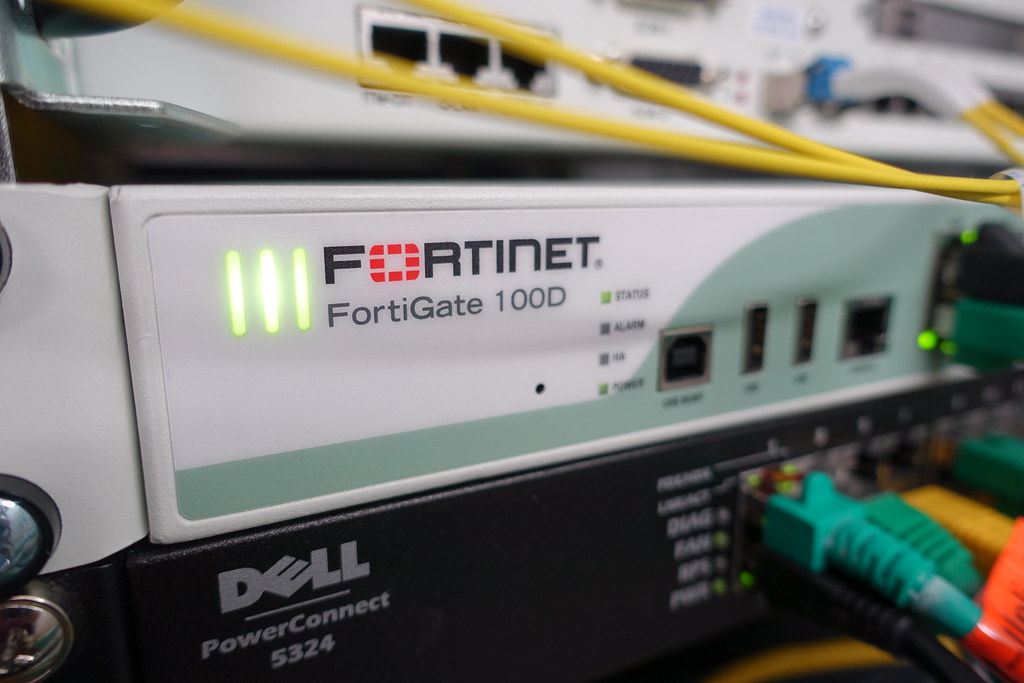
You bought a FortiGate firewall. Maybe your IT person recommended it. Maybe a reseller put it in during a network refresh a couple of years ago. Either way, it’s running. The lights are on. Traffic is flowing.

So you check the “firewall” box in your head and move on to the next thing demanding your attention.

Here’s the problem with that. The gap between having a Fortinet firewall and actually operating one properly is significant. And most businesses don’t discover that gap until something breaks, an auditor asks a question they can’t answer, or an incident reveals that their “enterprise-grade” security was running on default configurations the entire time.

This isn’t about the hardware. Fortinet makes excellent products. This is about what happens after the hardware gets racked and plugged in.

The Gap Between Owning Fortinet and Operating Fortinet

A FortiGate firewall out of the box is a powerful piece of equipment. But out of the box is also its least effective state.

Getting real protection from a Fortinet deployment requires ongoing, specialized work. We’re talking about custom rule sets built around your actual network traffic. Firmware updates tested and applied on a schedule that balances security with stability. Threat intelligence feeds tuned to your industry and risk profile. Logging and alerting configured so the right people see the right signals.

Most of that never happens when a generalist IT provider handles the deployment.

Not because they don’t care, but because Fortinet’s platform is deep. It takes dedicated training and hands-on experience to know what you’re looking at, let alone optimize it. A generalist provider will get the firewall online and traffic flowing. But the difference between “functional” and “properly secured” is where most SMBs are exposed without realizing it.

Your firewall might be running firmware that’s two major versions behind. Your rules might allow traffic patterns that should have been locked down months ago. Your VPN configuration might work fine for remote access but leave gaps in your security posture that nobody’s reviewed.

The firewall you bought and the firewall you’re actually running are often two very different things.

What “Authorized” Actually Means (And Why It’s Not Just a Badge)

Fortinet doesn’t hand out partner authorizations casually. The program requires real investment from the partner organization.

To earn and maintain authorized status, a provider must have:

  • Engineers who have completed Fortinet’s NSE (Network Security Expert) certification program, not just entry-level courses but advanced, product-specific training
  • Demonstrated deployment experience across Fortinet’s product ecosystem
  • Direct access to Fortinet’s technical support escalation paths, including Fortinet TAC (Technical Assistance Center)
  • Ongoing recertification and training requirements to keep pace with new firmware, features, and threat intelligence capabilities
  • Access to pre-release firmware, early vulnerability advisories, and partner-exclusive technical resources

This matters because it’s verifiable. You can confirm a provider’s Fortinet partner status. You can ask about their certification levels. It’s not a subjective claim about expertise. It’s a documented, vendor-validated standard.

When a provider tells you they “know Fortinet,” that could mean anything. When a provider holds authorized partner status, it means Fortinet has confirmed they meet a specific threshold of training, experience, and capability.

For a business owner who isn’t going to evaluate firewall configurations personally, that distinction is one of the few reliable signals available.

The Risks You Can’t See From the Outside

The hardest part about firewall management gaps is that everything looks fine until it doesn’t.

Your network is running. Users aren’t complaining. Nobody’s reporting issues. So you reasonably assume everything is working as intended.

But behind that calm surface, non-authorized providers commonly leave risks that don’t announce themselves:

  • Firmware gaps. Known vulnerabilities that Fortinet has already patched remain open because your provider doesn’t have access to early advisories or doesn’t prioritize firmware lifecycle management. Attackers actively scan for these.
  • Default or generic configurations. Factory settings and template rule sets that were “good enough” during setup but were never customized to match your actual network, your actual traffic, or your actual risk profile.
  • Logging and alerting blind spots. The firewall is generating data, but nobody’s configured it to surface the signals that matter. Suspicious traffic patterns, failed authentication attempts, or policy violations go unnoticed.
  • Support dead ends. When something goes wrong, your provider submits a support request through the same general channels available to anyone. No priority escalation. No direct TAC access. No established relationship with Fortinet’s engineering teams.
  • Licensing and warranty exposure. Incorrect licensing, lapsed support contracts, or misconfigured subscription services that only surface when you need them most, during a security event or an audit.

None of these show up in your day-to-day experience. Your network works. Your email flows. Your firewall has green lights. The risks accumulate silently until an event forces them into the open.

When a Crisis Hits, the Partner Matters More Than the Product

Every firewall vendor builds good hardware. What separates outcomes during a real security event is the quality of the response behind that hardware.

When an authorized Fortinet partner identifies an issue, they can escalate directly to Fortinet’s TAC with priority access. They speak the same technical language. They have established relationships. They can get advanced diagnostic support and engineering resources engaged quickly.

A non-authorized provider is working the same general support queue as everyone else. They may not know the right questions to ask. They may not have the diagnostic tools or the access level to get answers quickly. And during an active incident, every hour of delay increases the blast radius.

Think about what that means practically. A ransomware attempt hits your perimeter at 11 PM on a Friday. Your provider needs to analyze the traffic, adjust firewall rules in real-time, determine whether anything got through, and coordinate with your broader security stack.

The difference between a provider who can escalate directly to Fortinet engineering in the first 30 minutes and one who’s submitting a ticket and waiting for a callback is not a minor operational detail. It’s the difference between containment and catastrophe.

And consider the downstream implications. Your cyber insurance provider is going to ask how the incident was handled. Your customers may ask what security infrastructure you have in place. If you’re pursuing SOC 2 or ISO 27001, auditors will want to see evidence of competent, vendor-supported security management.

The answers to those questions look very different depending on who’s behind your firewall.

The Questions You Should Be Asking Right Now

You don’t need to become a Fortinet expert to evaluate whether your current setup is where it should be. But you do need to ask the right questions.

Start here:

  • What is your provider’s current Fortinet partner authorization level? Can they verify it?
  • When was your FortiGate firmware last updated, and what version are you running?
  • Does your provider have direct escalation access to Fortinet TAC, or are they using general support channels?
  • Has anyone reviewed and optimized your firewall rule sets in the last 12 months?
  • Are your Fortinet subscription services (threat intelligence, intrusion prevention, web filtering) active and properly configured?
  • If a critical security event happened at 2 AM on a Saturday, what does your provider’s response process actually look like?

If you don’t know the answers, or if your provider can’t give you clear ones, that’s a signal worth paying attention to.

This isn’t about blame. Many businesses end up in this position because the firewall was set up years ago and nobody had a reason to revisit it. But “it’s been working fine” and “it’s been protecting us effectively” are not the same statement.

The businesses that get this right aren’t necessarily the ones with the biggest budgets. They’re the ones who recognized that the expertise behind their security infrastructure matters as much as the infrastructure itself, and they made sure the people managing their firewall could actually back up that responsibility.

Your FortiGate firewall is only as strong as the team behind it. The question is whether you’ve confirmed that strength, or just assumed it.


Want to learn more about what proper Fortinet management looks like? Explore our resources on firewall management and managed cybersecurity services to understand what a fully supported Fortinet deployment involves.

The Real Cost of Running Outdated FortiGate Models

The firewall humming away in your server closet might be the most expensive piece of equipment in your office. Not because of what you paid for it years ago, but because of what it’s costing you right now while appearing to cost nothing at all.

It still powers on. Lights still blink. Traffic still flows. Your IT person says it’s fine. So you leave it alone, because you have actual fires to fight and a business to run.

But “still working” and “still protecting you” are two very different things. And the gap between them is where the real costs hide.

The Comfort of “It Still Works”

There’s a certain logic to keeping equipment running as long as possible. You paid for it. It functions. Replacing something that isn’t broken feels wasteful, especially when budgets are tight and a dozen other priorities compete for every dollar.

So the FortiGate you bought five or six years ago stays in place. Maybe your IT person has mentioned upgrading, but it wasn’t urgent. Maybe you looked at replacement costs and decided next year made more sense. Maybe nobody’s mentioned it at all, and you assumed no news meant good news.

This is how most businesses end up running outdated firewalls. Not through neglect, but through reasonable decisions that made sense at the time. The problem is that firewall security doesn’t age gracefully. What protected you in 2019 isn’t equipped for what’s attacking you in 2025.

What “End of Support” Actually Means

Every FortiGate model follows a lifecycle. Fortinet announces end-of-sale dates, then end-of-support dates, then end-of-vulnerability-support dates. These aren’t arbitrary deadlines designed to sell more hardware. They mark real transitions in what that device can do for you.

When a FortiGate reaches end of support, Fortinet stops releasing firmware updates for it. When it reaches end of vulnerability support, they stop patching security flaws entirely. Your firewall still powers on. It still passes traffic. But it’s frozen in time, running software that will never improve while threats continue evolving.

That model that felt cutting-edge when you bought it is now running firmware designed for a threat landscape that no longer exists. New attack techniques, new malware variants, new exploitation methods. None of them accounted for in the code protecting your network.

The firewall doesn’t know it’s obsolete. It just keeps doing what it was programmed to do. The gap between that and what you actually need grows wider every month.

The Security Gaps You Can’t See

Modern firewalls don’t just block traffic based on ports and protocols. They inspect encrypted connections, analyze application behavior, check files against threat intelligence feeds, and identify patterns that suggest compromise. At least, current ones do.

Older FortiGate models lack the processing power to inspect modern encrypted traffic volumes without crippling your network speed. Their threat intelligence subscriptions have expired or no longer update. Their inspection engines don’t recognize attack patterns that emerged after their last firmware update.

You’re essentially running antivirus from 2020 against malware from 2025. The firewall is still checking, still filtering, still doing its job as it understands it. But its understanding is years out of date.

The threats targeting SMBs today look nothing like they did when your firewall was current:

  • Ransomware that evades signature-based detection entirely
  • Encrypted command-and-control traffic that older inspection can’t analyze
  • Living-off-the-land attacks that don’t trigger traditional firewall rules
  • Credential theft techniques that bypass perimeter controls completely

Your outdated FortiGate isn’t failing. It’s succeeding at an outdated job.

The Performance Tax You’re Paying Daily

Security gaps aside, older hardware simply can’t keep up with modern network demands. When your FortiGate was sized, your team probably worked mostly on-site. Video calls were occasional. Cloud applications were supplementary. Encrypted traffic was a fraction of total volume.

Now encrypted traffic is nearly everything. Video conferencing runs constantly. Cloud applications are primary business tools. Remote workers VPN in from home offices. And that firewall sized for 2019 workloads is choking on 2025 reality.

The symptoms show up in ways that rarely get traced back to the firewall:

  • VPN connections that lag or drop during peak hours
  • Video calls that freeze or pixelate
  • Cloud applications that feel sluggish
  • File transfers that crawl
  • Remote workers complaining about “the internet” being slow

Your IT person troubleshoots the ISP, the switches, the WiFi, the endpoints. Sometimes they find something. Sometimes they just shrug. But the bottleneck sitting at your network’s front door rarely gets questioned because it’s “still working.”

Meanwhile, productivity drains away in ten-second delays and frozen screens, none of which show up on any invoice.

The Compliance Exposure Nobody Mentioned

If your business handles customer data, processes payments, or serves clients with security requirements, your firewall age isn’t just a technical concern. It’s a compliance exposure.

Auditors asking about your security controls will want to know if your firewall receives current patches. Running end-of-support hardware is a finding. It goes in the report. It raises questions about what other corners you’ve cut.

Cyber insurance carriers are getting more sophisticated about what they’ll cover. Application questionnaires now ask about infrastructure age, patch status, and end-of-life equipment. A claim denial because you were running unsupported hardware is not a theoretical risk. It’s happening to businesses right now.

Customer security questionnaires increasingly ask about firewall patch currency. Enterprise clients doing vendor risk assessments want to know your perimeter is current. Losing a deal because you couldn’t answer those questions honestly hurts more than a hardware refresh ever would.

The compliance cost of outdated equipment rarely announces itself until you’re sitting across from an auditor, an insurance adjuster, or a customer’s security team.

The Hidden Costs That Don’t Show Up on Invoices

Every workaround has a cost. Every limitation creates friction. Every band-aid consumes time that could go elsewhere.

Your IT person spending hours troubleshooting performance issues that trace back to underpowered hardware. That’s a cost. Projects delayed because the firewall can’t support new requirements. That’s a cost. The emergency premium you’ll pay when the device finally fails and you need replacement hardware overnight. That’s a cost.

Planned replacements happen on your timeline, with competitive pricing, proper configuration, and minimal disruption. Emergency replacements happen on the equipment’s timeline, with expedite fees, rushed implementation, and whatever’s available in stock.

The businesses that budget for infrastructure refreshes spend less over time than the businesses that run equipment until it fails. The math isn’t intuitive, but it’s consistent.

When “Saving Money” Becomes the Most Expensive Decision

The calculus feels simple on the surface. Replacement costs money. Keeping current equipment costs nothing. Except that’s not actually true.

Keeping outdated equipment costs you in security exposure, in performance degradation, in compliance risk, in insurance complications, in deals you can’t close, in productivity you can’t measure, and eventually in emergency replacement premiums.

The firewall that costs nothing on your monthly budget might be the most expensive line item you’re not tracking.

This isn’t about fear. It’s about seeing the full picture. The equipment you trust most deserves the most scrutiny, because you’ve built your entire network security assumption on its capabilities.

Understanding Your Options

If your FortiGate is approaching end of life, or passed it without anyone noticing, the path forward isn’t necessarily complicated. It starts with understanding where your current hardware sits in its lifecycle and what a refresh would actually involve.

BALANCED+ is a Fortinet Gold Partner, which means we work directly with Fortinet and can help you get the best pricing available on new FortiGate hardware. Whether you need a straightforward replacement or want to right-size your firewall for where your business is headed, we can help you understand the options without the pressure.

Your firewall should be an asset, not a liability hiding in plain sight.

Why Toronto Manufacturing Companies Are Turning to vCIO and Managed IT Services

It is 6:45 AM and your production supervisor just called. The CNC machines are not communicating with the job scheduling system. 

Orders are queued, operators are standing by, and nobody knows whether this is a network issue, a software glitch, or something worse. 

Your IT person is not answering. Your firewall vendor says it is not their problem. 

Meanwhile, every minute of downtime costs you money and credibility with customers who expect their parts shipped today.

If this sounds familiar, you are not alone. Manufacturing operations across the Greater Toronto Area are facing a reality that most did not anticipate: technology has become so deeply embedded in production that IT problems are now operational emergencies. And the patchwork approach that got you this far, one internal person, three or four vendors, a pile of tools nobody fully understands, is starting to show its limits.

The IT Reality Inside Most Toronto Manufacturing Operations

Walk through most small to mid-sized manufacturing facilities in Mississauga, Brampton, or the surrounding GTA and you will find a similar pattern. There is usually one IT person, sometimes shared with other responsibilities, handling everything from desktop support to network troubleshooting to security alerts. They are competent and hardworking, but they are also overwhelmed. The scope of what “IT” means has expanded dramatically, and no single person can reasonably stay current on networking, cybersecurity, cloud platforms, compliance requirements, and operational technology all at once.

Around that person orbits a constellation of vendors. One company handles the firewall. Another manages backups. A third provides the ERP system. Someone else installed the wireless network three years ago. Each vendor knows their piece, but nobody owns the whole picture. When something breaks, you become the project manager, coordinating between parties who point fingers at each other while your production floor waits.

The symptoms show up in predictable ways:

  • Network issues that take days to diagnose because nobody has visibility across all systems
  • Security tools running on endpoints that do not communicate with network monitoring
  • Backup systems configured for convenience rather than ransomware recovery
  • Software licenses scattered across credit cards with no central tracking
  • Technology decisions made reactively during emergencies rather than strategically
  • Shop floor equipment increasingly connected to networks that were never designed for operational technology

None of this happens because anyone made bad decisions. It happens because manufacturing companies grew, technology became more complex, and the organic approach that worked at $5 million in revenue does not scale to $15 million or $30 million.

Why Manufacturing Has Unique IT and Cybersecurity Pressures

Manufacturing is not like running an accounting firm or a marketing agency. The technology environment is fundamentally different, and generic IT approaches often miss critical considerations that directly affect production.

The most significant shift in recent years has been the convergence of operational technology and information technology. Equipment that used to run independently, CNCs, PLCs, robotics, quality inspection systems, now connects to networks for monitoring, scheduling, and data collection. This creates tremendous operational benefits, but it also means that a network problem or a cyber incident can halt physical production. The air gap that once protected shop floor equipment from IT issues largely does not exist anymore.

Downtime costs in manufacturing are measured differently than in office environments. When an email server goes down at a professional services firm, people are inconvenienced. When production systems go down at a manufacturer, you are losing thousands of dollars per hour in direct costs, plus the downstream impact on customer commitments, shipping schedules, and reputation. The tolerance for unplanned outages is essentially zero, yet most manufacturers are running IT environments that were not designed with that level of criticality in mind.

Compliance and customer requirements are also tightening. Manufacturers supplying automotive, aerospace, defense, or healthcare sectors increasingly face security questionnaires and audit requirements from their customers. Large OEMs want to know how you protect their intellectual property, their designs, their forecasts. Supply chain security has become a competitive factor. If you cannot demonstrate adequate controls, you may not make the approved vendor list, regardless of your quality or pricing.

Ontario manufacturers also operate under PIPEDA requirements for employee and customer data, and some sectors have additional regulatory obligations. These compliance requirements demand documentation, policies, and controls that most small IT operations are not equipped to produce or maintain.

The Hidden Cost of “Good Enough” IT

The real expense of fragmented IT is not what shows up on invoices. It is the operational drag that has become so normalized you stopped noticing it.

Consider how much leadership time goes into managing technology. You are the one coordinating between vendors when something breaks. You are sitting in meetings trying to understand why a project is over budget and behind schedule. You are making judgment calls on security recommendations you do not fully understand because there is nobody giving you the complete picture. Every hour you spend on IT coordination is an hour not spent on customers, operations, or growth.

There is a phrase that captures this dynamic well: constantly holding down the chicken’s neck. You are expending continuous energy just to keep chaos from spiraling out of control. Nothing is actually broken, but nothing is truly stable either. You are always one resignation, one equipment failure, one security incident away from crisis. That underlying tension consumes resources even when everything appears fine on the surface.

The hidden costs accumulate in multiple areas:

  • Duplicate spending on tools with overlapping capabilities because each vendor recommended their preferred solution
  • Production delays from IT issues that take too long to diagnose and resolve
  • Compliance scrambles before customer audits because documentation does not exist
  • Strategic projects that never launch because IT capacity is consumed by firefighting
  • Risk exposure from security gaps that nobody is monitoring comprehensively
  • Employee productivity lost to recurring technical issues that never get permanently resolved

When manufacturers actually calculate these costs, the number is usually surprising. The “affordable” patchwork approach is often more expensive than a structured alternative, before even accounting for risk.

What a Different Model Looks Like

The alternative that more Toronto-area manufacturers are exploring is a unified approach where IT operations, cybersecurity, and strategic planning come from a single accountable source. This model typically combines a virtual Chief Information Officer for leadership and planning with managed services for day-to-day operations and security.

A vCIO provides the strategic layer that most small manufacturers lack. This is someone who understands both technology and business operations, who can translate between the shop floor and the server room, and who takes ownership of your technology roadmap. They participate in planning conversations, help you evaluate major investments, and ensure that technology decisions align with where your business is heading over the next three to five years. They attend your quarterly reviews. They know your capacity constraints and growth targets. They think about your technology the way you think about production planning.

The managed services layer handles everything operational. Help desk support for employees. Network monitoring and maintenance. Endpoint protection and security operations. Backup management and disaster recovery. Vendor coordination and license tracking. All of it flows through a single team with unified visibility across your entire environment.

What changes when this model is in place:

  • One phone number to call for any technology issue, with accountability for resolution
  • Proactive monitoring that catches problems before they affect production
  • Security and IT operations integrated so that protection does not create operational friction
  • Strategic planning aligned with your business goals, not vendor sales cycles
  • Documentation and compliance support built into ongoing operations
  • Professionals with manufacturing experience who understand OT/IT integration, production priorities, and what downtime actually costs

The embedded aspect matters more than many manufacturers initially realize. This is not just remote monitoring and occasional phone calls. The best partnerships include regular on-site presence, people who know your facility, your equipment, your team. They walk the floor. They understand that the stamping press network cannot go down during first shift. They have context that remote-only support cannot provide.

What Toronto-Area Manufacturers Should Consider

If you are evaluating whether this model makes sense for your operation, there are some questions worth asking honestly.

First, consider whether you have outgrown your current approach. Signs include: IT issues that take too long to resolve, recurring problems that never get permanently fixed, security concerns you are not confident are being addressed, leadership time increasingly consumed by technology coordination, and customer compliance requirements you struggle to meet. If several of these resonate, your current model may have hit its ceiling.

Second, think about what “managed IT” actually means in your context. Not all providers are equipped for manufacturing environments. Ask specifically about experience with OT/IT integration, with production-critical systems, with compliance documentation. Ask how they handle on-site requirements. A provider who works primarily with professional services firms may not understand that your tolerance for scheduled maintenance windows is very different from an accounting office.

Third, understand what you are actually comparing when you evaluate cost. The relevant comparison is not just your current IT spend versus a managed services contract. It is your current IT spend plus the hidden costs of coordination overhead, plus the risk exposure of gaps, plus the opportunity cost of strategic projects delayed, versus a unified approach. When manufacturers do this calculation honestly, the managed model is often cost-neutral or cost-positive, while delivering materially better outcomes.

Finally, consider the value of having someone accountable for the whole picture. In fragmented models, nobody owns the outcome. When you ask why a problem happened, you get explanations about whose piece failed. In a unified model, one team owns it all. They cannot point fingers at another vendor because there is no other vendor. That accountability changes behavior in ways that benefit you.

Moving Forward

Technology has become too integrated into manufacturing operations to treat as an afterthought or a fragmented collection of vendors and tools. The GTA manufacturers who are getting this right are not necessarily spending more on IT. They are spending differently, consolidating accountability, bringing in strategic expertise, and building technology environments that support production rather than constantly threatening to disrupt it.

If your current approach still works, there is no urgency to change. But if you are experiencing the patterns described here, if you are holding down the chicken’s neck just to maintain stability, it may be worth exploring what a different model could look like for your operation.

Learn More About Managed IT for Manufacturing

Want to understand how unified IT and cybersecurity management works in a manufacturing environment? Explore our resources on vCIO services and managed IT for production operations, or reach out for a conversation about what a partnership could look like for your facility.

What Managed IT Actually Costs in Toronto (And What You’re Really Paying For)


You’ve received three managed IT proposals. One quotes $95 per user monthly. Another wants $145. The third is $180. All three promise “proactive monitoring,” “help desk support,” and “security management.”

The descriptions sound identical. The pricing differs by nearly 90%. And you’re left wondering what you’re actually paying for, and more importantly, what you’re not getting at the lower price point.

For Toronto SMBs evaluating managed IT providers, pricing opacity creates impossible comparisons. The per-user number tells you almost nothing about service substance, operational reality, or whether you’ll actually get the protection and support your business needs.

Why Managed IT Pricing Varies by 40% for “The Same Service”

Identical service descriptions mask completely different operational realities. When three providers all claim to offer “24/7 monitoring and support,” they’re rarely describing the same thing.

The $95 provider might mean automated alerts reviewed once daily during business hours, with after-hours support requiring additional fees. The $145 provider could include genuine 24/7 SOC monitoring with human analysts triaging threats in real time. The $180 provider might add strategic quarterly reviews and compliance documentation that the others exclude entirely.

Here’s what typically sits behind identical marketing language:

Monitoring depth: Basic uptime checks versus comprehensive endpoint visibility, network traffic analysis, and security event correlation

Response protocols: Email ticket submission versus phone support, versus direct access to named engineers who know your environment

Expertise levels: Tier 1 help desk technicians handling password resets versus senior engineers managing complex infrastructure

Security integration: Basic antivirus versus layered endpoint protection, email security, firewall management, and threat hunting

The price difference isn’t arbitrary markup. It reflects fundamentally different service models that deliver different business outcomes.

The Per-User Model (And What It Actually Includes)

Most managed IT providers price on a per-user-per-month basis, but what that actually covers varies dramatically by provider and tier.

At $75-$100 per user, expect:

  • Help desk support during business hours (email/phone)
  • Basic endpoint monitoring and patch management
  • Reactive issue resolution within standard SLA
  • Limited network monitoring
  • Basic antivirus/antimalware

At $100-$150 per user, expect:

  • Extended or 24/7 help desk coverage
  • Proactive monitoring with automated remediation
  • Enhanced security tools (EDR, email filtering)
  • Network performance monitoring
  • Monthly or quarterly business reviews
  • Basic compliance documentation support

At $150-$200+ per user, expect:

  • Dedicated account management and vCIO services
  • Comprehensive security stack (SIEM, MDR/XDR)
  • Strategic IT planning and roadmapping
  • Priority response with guaranteed SLAs
  • Compliance readiness (SOC2, ISO prep)
  • Advanced services like penetration testing

But even within these ranges, specific inclusions vary. One provider’s $120 tier might include backup management while another’s excludes it entirely. Understanding the service matrix matters more than the headline number.

The Services That Look Included But Aren’t

This is where pricing transparency breaks down and surprise invoicing begins. Services that sound like core managed IT but almost always cost extra:

Project work: Network upgrades, server migrations, software rollouts, infrastructure redesignanything beyond “keeping current systems running” typically bills separately at hourly or project rates

Hardware: Endpoints, servers, network equipmentsome providers lease equipment as part of service bundles, most expect you to purchase separately

Software licensing: Microsoft 365, security tools, backup solutionsproviders manage these but rarely include licensing costs in per-user pricing

Security add-ons: Penetration testing, security awareness training, incident response retainersoften presented as “available” but priced separately

Compliance services: SOC2 audits, policy documentation, controls implementationstrategic work that sits outside operational management

Onboarding: Initial network assessment, documentation creation, systems standardizationmay require separate implementation fee

The $95 provider who seems cheaper might exclude backup management, security tools, and after-hours support that the $145 provider includes. Suddenly the “expensive” option costs less when you add what’s missing.

Before comparing prices, get explicit confirmation: what’s in base pricing, what’s optional add-on, what’s separate project work, and what’s your responsibility to provide.

What You’re Actually Paying For (Beyond the Technical Services)

Managed IT pricing isn’t just buying technical tasks. It’s purchasing business outcomes that most SMB owners significantly undervalue until they’re missing.

Risk transfer: You’re no longer the one responsible when systems fail, security incidents occur, or compliance audits reveal gaps. The provider owns resolution, carries liability, and absorbs the cost of their mistakes.

Operational predictability: Fixed monthly costs replace unpredictable break-fix bills, emergency rates, and crisis spending. You can budget accurately instead of hoping nothing breaks.

Strategic guidance: vCIO services provide the IT leadership most SMBs can’t afford to hire. Technology decisions align with business objectives instead of happening reactively under pressure.

Reduced cognitive load: You stop being the integration point between technical silos, the mediator between vendors, and the person who has to understand every IT decision’s implications.

Proactive problem prevention: Issues get identified and resolved before they impact users, not after employees are already complaining and productivity is lost.

Compliance readiness: Frameworks, documentation, and controls get built systematically instead of scrambled together when a customer asks or an auditor shows up.

The business that pays $180 per user for comprehensive managed services plus integrated security isn’t overpaying compared to the one spending $95 for basic support. They’re buying operational maturity, risk protection, and strategic capability that the cheaper option simply doesn’t provide.

When Lower Pricing Signals Future Problems

Artificially low managed IT pricing creates the exact problems it’s supposed to prevent. When providers undercut market rates, they’re either cutting corners on service delivery or planning to recover costs through add-ons and overages.

Watch for these red flags in below-market proposals:

  • Response times measured in days, not hours
  • No after-hours or emergency support included
  • “Monitoring” that’s really just automated alerts with no human analysis
  • Security services limited to basic antivirus
  • Help desk staffed by tier 1 technicians with no senior escalation path
  • No strategic planning, business reviews, or proactive recommendations
  • Surprise project charges for routine infrastructure maintenance
  • Exclusions for backup management, compliance support, or vendor coordination

The provider charging $85 per user isn’t offering you a deal. They’re offering you understaffed support, reactive-only service, and basic tooling that leaves your business exposed to the ransomware, compliance failures, and operational chaos that managed services should prevent.

You’ll end up paying the difference, just through emergency response fees, breach remediation costs, lost productivity, and eventually switching providers after discovering they can’t deliver what your business needs.

The Hidden Costs of Your Current Approach

Before dismissing managed services as expensive, calculate what your current approach actually costs.

Most SMBs are already spending on:

  • Fractional or full-time IT staff salaries ($60K-$90K+ for someone capable)
  • Break-fix IT support charged at emergency rates when things fail
  • Software licensing scattered across departments with no optimization
  • Security tools purchased reactively without integration or management
  • Compliance consultants hired when customers require certifications
  • Downtime impact measured in lost revenue and damaged reputation
  • Leadership time spent managing IT vendors, making technical decisions, and firefighting issues

Add it up honestly. A 30-person business paying $150 per user ($4,500 monthly, $54K annually) for comprehensive managed services often spends more than that on their current fragmented approach, just without the predictability, expertise, or accountability that managed services provide.

The question isn’t whether managed IT costs money. It’s whether the alternative costs more while delivering less protection, less strategic value, and more operational chaos.

Evaluating Proposals Based on Operational Reality

Price per user is a starting point, not a decision criterion. Before signing, get specific answers that reveal what you’re actually buying:

Ask about response protocols: What’s the guaranteed response time for critical issues? Who actually answers when you call? Do you get a dedicated team or whoever’s available? What constitutes after-hours support versus business hours?

Clarify monitoring scope: What systems get monitored? How often? Who reviews alerts and decides what’s actionable? What’s the escalation path when issues are detected?

Define security inclusion: Which security tools are included in base pricing? What’s managed versus just recommended? How do updates, threat response, and incident investigation work?

Understand exclusions: What services require separate project quotes? What’s your responsibility to provide or purchase? Where do overages occur?

Evaluate strategic support: Do you get regular business reviews? Technology planning? Compliance guidance? Or purely reactive support when things break?

The provider who can answer these questions specifically, with documented SLAs and clear service definitions, is offering real managed services. The one who speaks in generalities and promises everything is setting you up for disappointment, surprise costs, and eventually a painful provider transition.

Your business deserves transparency on what you’re paying for, confidence that it will actually be delivered, and accountability when gaps emerge. Managed IT pricing should reflect operational substance, not marketing promises.


Learn More About Managed Service Models

Want to understand how different managed IT service tiers align with specific business needs and risk profiles? Explore resources on building the right technology foundation for your growth stage and industry requirements.

What Bill 194 Means for Your Business

Bill 194 Explained

Ontario Bill 194 establishes mandatory cybersecurity frameworks, breach notification requirements, and AI governance standards for public sector organizations. While the law targets public entities, it effectively sets a new provincial standard that is cascading into the private sector. To maintain compliance, public organizations must now demand rigorous documented security protocols, formal incident response plans, and privacy impact assessments from their private-sector vendors and partners.

It’s Monday morning. You’re reviewing a contract proposal from a potential customerone that would represent your largest deal this year. Everything looks good until you reach the security questionnaire attached to the agreement.

  • Question 14: Does your organization maintain a documented cybersecurity framework compliant with provincial requirements?
  • Question 15: Describe your incident response plan and breach notification procedures, specifically citing your timeline for reporting “Real Risk of Significant Harm” (RROSH).
  • Question 16: What governance controls do you have in place for AI systems processing personal information?

You pause. Your IT person handles security. You have antivirus. You’ve never had a breach. But documented frameworks? Formal incident response plans? AI governance?

You’re not sure how to answer, and you’re starting to suspect “we’ve never had a problem” isn’t going to cut it anymore.

If this scenario feels uncomfortably plausible, you’re not alone. Ontario Bill 194 just changed the landscape, and most small business owners have no idea it happened.

What Bill 194 Actually Changes (And Why It Matters to You)

For years, cybersecurity and privacy practices in Ontario existed in a grey zone. Best practices were recommended. Frameworks were voluntary. Unless you operated in a heavily regulated industry, you could largely decide what “good enough” looked like for your business.

Bill 194 just moved the goalposts.

Technically, the Strengthening Cyber Security and Building Trust in the Public Sector Act places statutory obligations on public sector entitieshospitals, schools, municipalities, and provincial agencies. But don’t let the “public sector” label fool you. This legislation effectively creates a new provincial standard that is rapidly cascading into the private market.

Here is the ripple effect that is catching small businesses off guard:

Because public sector organizations are now legally mandated to implement robust cybersecurity programs, conduct Privacy Impact Assessments (PIAs), and strictly govern their AI use, they can no longer tolerate undefined risk in their supply chain.

To remain compliant themselves, these organizations must push these new requirements down to their vendors.

  • If you sell software to a municipality, you now need to prove your security controls match their statutory requirements.
  • If you provide services to a local hospital, you must demonstrate you can handle data breaches according to their new “Real Risk of Significant Harm” standard.
  • If you process data for a provincial agency, you are now effectively an extension of their compliance perimeter.

The practical translation? If you do business with the public sectoror with larger enterprises that doyou are being held to these standards contractually, even if the law doesn’t name you directly.

This isn’t just about abstract policy. It’s about commercial eligibility. The requirements for documented security frameworks, access controls, and formal incident response plans are shifting from “nice-to-have” features into non-negotiable terms of business.

The Gap Between What You Think You Have and What’s Now Required

Most SMB owners believe they’re reasonably secure. They’ve invested in basic protections. They’re cautious with passwords. They’ve told employees to watch out for phishing emails.

But Bill 194 standards don’t ask whether you’re trying. They ask whether you can demonstrate documented, tested, and maintained security controls.

Consider what a “documented cybersecurity framework” actually entails. It is not just having a firewall. It involves specific, auditable artifacts:

  • Written Policies: Explicit documentation for access management, authentication requirements, and data handling.
  • Active Management: Evidence that someone is responsible for maintaining those policies and that they are reviewed regularly.
  • Vendor Management: Proof of how you assess and manage the security of your own suppliers.
  • Formal Incident Response: A defined procedure for roles, responsibilities, and escalation pathsnot just an informal plan to “call IT.”

Most small businesses don’t have this. They have practices, habits, and informal processes that exist in the heads of one or two technical people. When someone leaves the company, that knowledge walks out the door. When an auditor (or a potential client) asks for documentation, there’s nothing to show.

The gap isn’t about good intentions. It’s about formalization. Bill 194 just made “informal” insufficient.

When Compliance Becomes a Competitive Disadvantage

Here’s where this gets more painful than just regulatory obligation. Bill 194 doesn’t exist in isolation. It’s part of a broader shift in how businesses evaluate their partners and vendors.

Larger customers are increasingly requiring security attestations before signing contracts. They want to know you have documented security controls, not because they’re being difficult, but because their own compliance obligations, insurance requirements, and risk management practices demand it.

When you can’t answer their security questionnaire with specifics, you don’t just look unprepared. You look like a liability. And they move on to vendors who can demonstrate compliance.

The same dynamic plays out in M&A activity. If you’re considering selling your business or taking on investors, security due diligence is now standard. Acquirers want to see documented frameworks, tested incident response plans, and clean compliance records. Gaps in these areas reduce valuation or kill deals entirely.

Bill 194 raises the baseline expectation for what it means to be a credible business partner in Ontario. If you’re below that baseline, you’re not just non-compliant. You’re becoming less competitive.

The Breach Reporting Obligations You’re Not Ready For

Most SMB owners think about cybersecurity in terms of prevention. Don’t get breached. Keep the bad guys out.

Bill 194 forces a different mindset: assume breach is possible and demonstrate you’re prepared to respond.

The legislation aligns with the “Real Risk of Significant Harm” (RROSH) standard. If personal information is compromised, organizations must determine if that threshold is met and, if so, notify affected individuals and regulators within strict timeframes.

This isn’t “let’s figure it out when it happens.” This is “do you have a tested process?”

  • Can you identify a breach immediately?
  • Can you assess its scope and preserve evidence?
  • Can you determine if the RROSH threshold has been met?
  • Can you notify the right people in the right order with the right information?

For most small businesses, the honest answer is no. They’ve never run a tabletop exercise. They’ve never documented who’s responsible for what during an incident. When a breach happens, they’re figuring out the response in real time while dealing with the crisis. And that’s exactly when mistakes happen and contractual obligations get missed.

The AI Governance Component Most Businesses Don’t See Coming

While most SMB owners are focused on ransomware and phishing, Bill 194 includes a major curveball: AI governance requirements.

If your business uses AI tools to process personal informationwhether that’s customer service chatbots, marketing automation, predictive analytics, or automated decision-makingyou now have obligations around transparency, accountability, and responsible use.

You might not think of yourself as an “AI company,” but if you use tools that automatically categorize customer inquiries or personalize marketing content, you are in scope.

Bill 194 expects governance frameworks around AI deployment, not just informal “we’re using this tool because it’s helpful.” Most small businesses have adopted AI capabilities without considering the regulatory implications. They signed up for a SaaS platform that happened to include AI features.

Bill 194 just started asking questions about those tools. And most businesses have no idea how to answer.

Why “We Haven’t Been Breached Yet” Isn’t a Defense Anymore

There’s a dangerous comfort that comes from a lack of historical incidents. You’ve been in business for years without a major security event. Your current approach seems to be working. Why fix what isn’t broken?

Bill 194 fundamentally rejects that logic.

The legislation creates proactive obligations. You’re required to have appropriate security frameworks in place regardless of your incident history. “We’ve been lucky so far” is not a legal defense, nor is it a valid answer on a vendor security questionnaire.

When a regulator or a potential client reviews your security posture, they’re not asking whether you’ve been breached. They’re asking whether you’ve implemented the required controls. The absence of historical breaches doesn’t prove you have adequate security. It just proves you haven’t been tested yet.

The Window to Prepare Is Narrowing

Bill 194 isn’t pending. It’s law.

That creates two very different positions you can be in. You can be among the businesses recognizing this early and using the time available to prepare methodically. Or you can be among the businesses that wait until a customer questionnaire or a regulatory audit forces rushed, expensive remediation.

The first position gives you control. You can assess your current state honestly, identify the gaps, and address them in the order that makes sense for your business.

The second position strips away control. You’re reacting to external pressure with compressed timelines and higher costs. You’re explaining gaps to customers while losing deals.

Early awareness doesn’t eliminate the work. But it transforms it from a crisis into a manageable project. The window is open now. But it’s narrowing.

Ready to build a defensible security posture?

Explore our resources on building documented security frameworks that satisfy Bill 194 requirements and win more business.

Managed IT Services Cost in Toronto: 2025 Pricing Guide

If you have been shopping for IT support in the Greater Toronto Area, you have probably hit the same wall every business owner hits: nobody will tell you what it actually costs.

Most providers insist on a discovery call, a network assessment, and a formal proposal before they will give you a number. They say “it depends.” And while that is technically true, it does not help you build a budget or decide if outsourcing even makes sense.

You are trying to figure out if you can afford to stop juggling vendors, close your security gaps, and sleep through the night without worrying about ransomware. You need real numbers.

This guide gives you transparent pricing based on current GTA market rates. You will learn what separates a $120/user provider from a $250/user provider, where the hidden costs show up, and how to spot red flags in proposals before you sign anything.

What Managed IT Actually Costs in Toronto

For a complete managed IT solution that includes help desk, cybersecurity, cloud management, and strategic guidance, expect to pay $120 to $250 per user per month.

What drives the range:

  • Security depth: Basic antivirus vs. 24/7 threat monitoring.
  • Support hours: Business hours vs. true 24/7 coverage.
  • Complexity: Number of servers, cloud applications, and locations.
  • Compliance needs: SOC2, ISO 27001, or PCI-DSS requirements.

Warning: Prices below $100/user usually mean limited services. You might get monitoring and patching, but support requests get billed hourly at $125 to $175 per hour. The advertised “low rate” disappears fast.

Prices above $250/user typically cover specialized compliance (HIPAA, CMMC), highly regulated industries, or businesses with complex multi-site infrastructure.

The Three Pricing Tiers (And What You Get)

Not all “Managed IT” contracts are the same. Understanding these tiers helps you compare proposals accurately.

Tier 1: Monitoring-Only Model

Price: $80 to $110 / user / month

  • What is included: Remote monitoring and patch management, Basic antivirus, Remote access tools for techs.
  • What is missing: Unlimited help desk (you pay hourly for every support request), Advanced threat detection or SOC monitoring, Strategic IT planning.
  • The Risk: This model looks cheap until your team starts submitting tickets. A few busy weeks can cost you more than a flat-rate plan. More importantly, basic antivirus will not stop modern ransomware.

Tier 2: Standard Managed Services

Price: $120 to $160 / user / month

  • What is included: Unlimited remote help desk (typically 9-5, weekdays), Microsoft 365 administration, Standard endpoint protection, Backup monitoring.
  • What is missing: 24/7 Security Operations Center (SOC), Advanced Threat Hunting (MDR/XDR), vCIO or strategic IT roadmap, Compliance support.
  • Who it fits: Very small businesses with low security risk and no compliance requirements. If you handle customer data, process payments, or need cyber insurance, this tier leaves gaps. Learn more about managed IT support

Tier 3: Security-First & Compliance-Ready

Price: $170 to $250 / user / month

  • What is included: Everything in Tier 2, PLUS: 24/7 MDR (Managed Detection and Response) with human threat analysts, Zero-trust architecture and MFA deployment, vCIO for IT roadmapping and budget planning, Compliance support (SOC2, ISO 27001 readiness), Incident response and forensics capability.
  • The Value: This tier replaces the need to hire an internal security engineer or CISO. It creates a defensible security posture that satisfies cyber insurance auditors and customer security questionnaires.
  • Verdict: This is the standard for 2025 if you handle regulated data, fear ransomware, or need compliance certifications to win contracts. Explore managed cybersecurity services

What Drives the Price (And Why It Matters)

Two proposals for the same user count can differ by $2,000 per month. Here is what accounts for the gap.

1. The Security Stack: Antivirus vs. MDR

Basic antivirus costs a provider about $3 per user per month. It catches known malware but misses sophisticated attacks.

MDR (Managed Detection and Response) costs $15 to $30 per user. It includes AI-driven threat detection and 24/7 human analysts who hunt for anomalies in real time. This is what stops ransomware before it spreads.

  • Tradeoff: You can save money skipping MDR, but you accept significantly higher breach risk. If ransomware hits, the recovery cost (downtime, ransom, legal fees, reputation damage) will be 50x your annual IT budget. Learn about MDR and XDR monitoring

2. Business Hours vs. 24/7 Support

“24/7 support” has different definitions. Some providers offer voicemail after 5 PM with next-business-day callback. Others staff live technicians around the clock. True 24/7 coverage requires three shifts of employees. That increases labor costs and gets reflected in your price.

  • Tradeoff: If your team works weekends or nights, or if downtime outside business hours costs you revenue, business-hours-only support will hurt.

3. Strategic Guidance (vCIO)

Low-cost providers are “fixers.” They respond to tickets. Higher-tier providers include a vCIO (Virtual Chief Information Officer) who meets with you quarterly to plan budgets, audit compliance, and roadmap your IT for the next three years.

  • Tradeoff: Without this, you risk overspending on the wrong tools, missing compliance deadlines, or falling behind competitors who have a clear IT strategy.

Hidden Costs and Red Flags

Even flat-rate agreements can have surprise charges. Watch for these:

  • Onboarding Fees: Most providers charge a setup fee to document your network and deploy tools.
    • Reasonable: One month of service fees ($2,000 to $5,000).
    • Red Flag: Zero (corners are being cut) or excessive (over $10,000 for a small network).
  • “Out of Scope” Project Charges: Managed services cover maintaining what you have. New projects often cost extra, such as Cloud migrations (Azure, AWS), Office relocations, or Major M365 tenant restructures. Ask upfront: What is included in monthly fees vs. billed separately?
  • Onsite Support: Many “unlimited” contracts only cover remote support. If a printer breaks or a server crashes and requires hands-on work, you might pay $150+ per hour for travel and labor. Ask: Is onsite support included, or is it billed separately?
  • Per-Device Pricing Traps: Some providers advertise a low per-user rate but charge separately for each server, firewall, cloud tenant, and network switch. By the time you add everything, the “cheap” quote is suddenly the most expensive. Ask for all-in pricing.

The ROI Math: Hiring vs. Outsourcing

A $4,000 monthly IT bill feels expensive until you compare it to the alternative.

Option A: Hire an Internal IT Generalist (Toronto Market)

  • Salary: $75,000 to $90,000
  • Benefits, payroll taxes, vacation: +20% (~$15,000)
  • Tools and training: +$5,000
  • Total annual cost: ~$100,000
  • Limitations: This is one person. They take vacations, get sick, and cannot be an expert in cybersecurity, cloud, and help desk simultaneously. When they leave, their knowledge leaves with them.

Option B: Managed IT (Tier 3)

  • 20 users x $200/month
  • Total annual cost: $48,000
  • What you get: An entire department. Service desk manager, Level 1-3 technicians, security analysts, and a vCIO. 24/7 coverage. Enterprise-grade tools included.

You save 50% and get broader expertise, better coverage, and no single point of failure.

The Downtime Cost

This math does not include the cost of an outage. If ransomware takes your business offline for five days, you face lost revenue, customer trust damage, legal costs, and regulatory fines. A Security-First MSP is insurance against that scenario. The ROI is not just cost savings. It is business continuity. Explore incident response

Questions to Ask Before You Sign

Use this checklist to evaluate any proposal:

  • Security: Does this include 24/7 SOC monitoring? What endpoint protection do you use (antivirus or EDR/MDR)? Do you provide incident response and forensics if we get breached?
  • Support: Is help desk support truly unlimited, or are there ticket caps? What are your guaranteed response times (in writing)? Is onsite support included or billed separately?
  • Compliance: Have you helped other clients achieve SOC2 or ISO 27001? Will you provide audit-ready documentation?
  • Transparency: What is excluded from this monthly rate? What is your onboarding process and cost? Can I see a sample SLA?

Red flags that should stop you:

  • No written SLAs or vague “best effort” language.
  • Unwillingness to discuss their security stack.
  • No compliance or audit experience.
  • Contracts with auto-renewal clauses and no clear exit terms.

Compliance and Insurance: The Cost You Cannot Skip

In 2025, many SMBs discover their insurance renewal depends on security controls. Insurers now require:

  • Multi-factor authentication (MFA)
  • Endpoint detection and response (EDR)
  • Regular backups with offline/immutable copies
  • Incident response capability

If your provider does not include these, you risk losing coverage or facing 3x premium increases.

Similarly, larger customers increasingly require SOC2 or ISO 27001 certification before signing contracts. Achieving compliance readiness without the right IT partner is nearly impossible for an SMB.

The decision: Paying for Tier 3 services is not optional if you want to stay insurable and competitive.

Deciding Based on Risk, Not Just Price

The cheapest proposal is rarely the best deal. A provider charging 30% less often leaves you 100% more exposed.

When you review quotes, ask yourself:

  • Can this provider stop a ransomware attack at 2 AM on a Saturday?
  • Will they help me pass my cyber insurance renewal?
  • Do they have the expertise to guide me through SOC2 compliance?
  • If we get breached, can they handle incident response and forensics?

If the answer to any of those is “no” or “maybe,” the price does not matter. You are buying incomplete protection.

The businesses that get this right are not the ones with the biggest budgets. They are the ones who recognize that IT is not a cost center. It is the foundation that protects revenue, reputation, and customer trust.

Get a Transparent Assessment

Stop guessing what IT should cost for your business. We provide clear, flat-rate quotes based on your actual environment with no hidden fees and no surprises.

Contact us today for an honest assessment and a detailed roadmap aligned with your goals.