 Paul Thresher
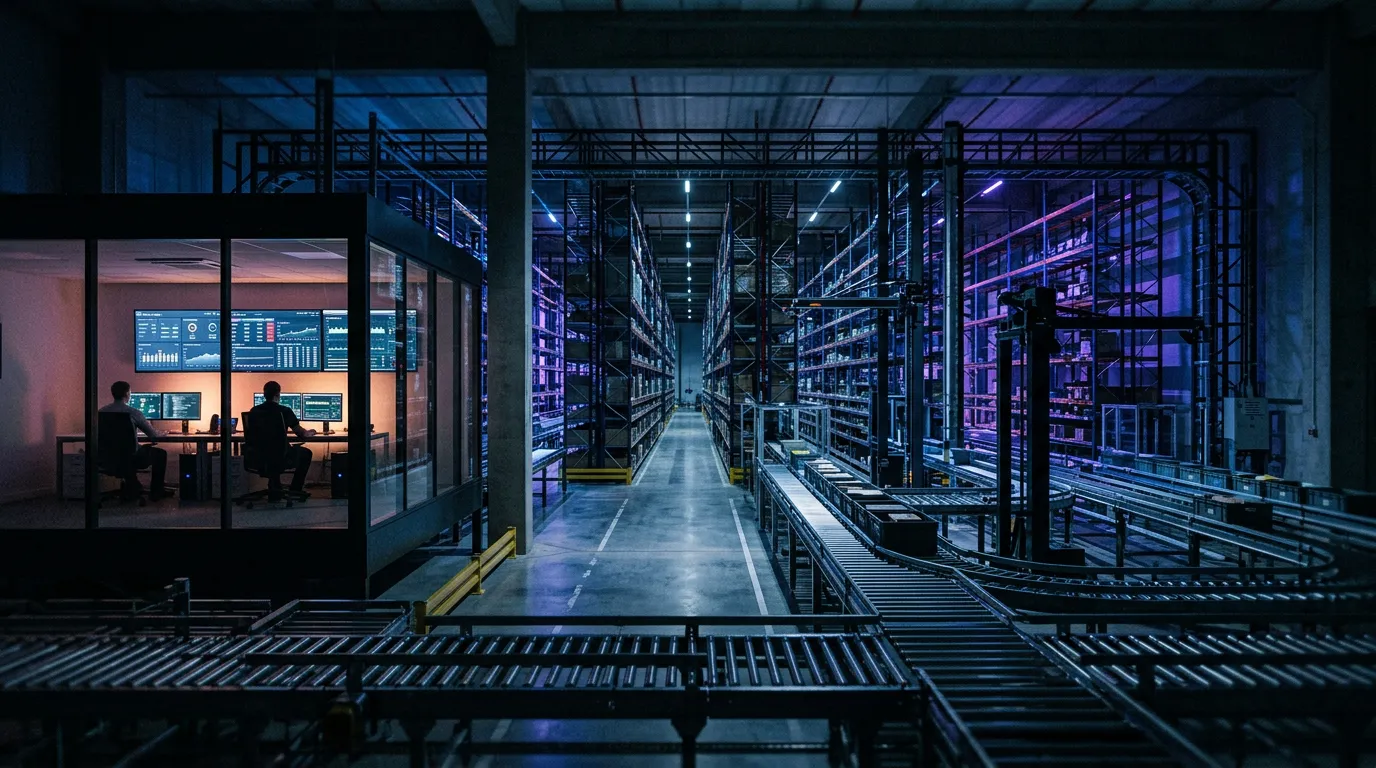
 If you run IT for a plant, a warehouse, or a distribution operation in Mississauga, you already know the building is not one network. It is an office network, a plant floor, a warehouse management system, a handful of machines nobody wants to touch because they run a production line, and whatever the third-party logistics partner plugged in last year.
That mix is exactly what ransomware crews look for. This post covers why Mississauga’s industrial base is disproportionately exposed, where attackers actually get in, and what a workable security baseline looks like when you cannot take a production line down for a weekend.
Mississauga’s economy is concentrated in exactly the sectors ransomware groups target most. Manufacturing, transportation and retail trade together employ 173,300 people in the city, and ransomware is the top cybercrime threat to Canadian critical infrastructure according to the Canadian Centre for Cyber Security. The risk is not that these businesses are careless. It is that plant and warehouse environments run older equipment that cannot be patched on a normal cycle, and that equipment increasingly sits on the same network as email and finance.
Mississauga’s industrial concentration is a security problem, not just an economic statistic. Manufacturing and logistics operations run technology that predates modern security assumptions, and connecting that technology to the business network is what turns a routine phishing email into a stopped production line. Segmentation and monitoring matter more here than any single product purchase.
Operational technology (OT)
Operational technology is the hardware and software that runs physical processes: programmable logic controllers on a production line, conveyor and sortation controls in a distribution centre, building management systems, and the industrial PCs that drive them. Unlike office IT, OT is built for uptime and long service life, often 15 to 20 years, which means it frequently runs operating systems that no longer receive security updates.
Why are Mississauga manufacturers and logistics firms a ransomware target?
Because downtime costs them more per hour than almost any other kind of business, which makes them more likely to pay. A law firm that loses its file server has a bad week. A distribution centre that loses its warehouse management system stops shipping within the hour, and every trailer in the yard and every downstream customer feels it that same day. Attackers understand this pricing logic well.
Mississauga’s business base makes the city a dense target environment. The city’s 2025 Employment Survey counts an estimated 513,700 employees across roughly 23,700 businesses, with manufacturing, transportation and retail trade as the top employment sectors at a combined 173,300 employees. Much of that sits in the employment lands around Pearson, where warehousing, freight forwarding, food processing and light manufacturing cluster tightly together and share suppliers, carriers and systems integrators.
26%
Average year-over-year increase in ransomware incidents in Canada from 2021 to 2024 (Canadian Centre for Cyber Security, Ransomware Threat Outlook 2025-2027)
The Cyber Centre’s Ransomware Threat Outlook 2025-2027 names Akira among the top three ransomware threats to Canada and notes it has been used against manufacturing organizations both globally and domestically. The same report is blunt about what this means for smaller operators: operational downtime, supply chain delays and recovery costs can determine whether a smaller enterprise stays commercially viable at all.
What makes plant and warehouse networks different from office IT?
The core difference is that you cannot patch or reboot most of it on demand. Office IT assumes you can push an update overnight and restart a laptop. A palletizer, a labelling line, or a sortation controller has a maintenance window measured in scheduled shutdowns, sometimes twice a year, and the vendor contract may void support if you patch the underlying operating system yourself.
That constraint is legitimate. The mistake is treating it as a reason to do nothing. If you cannot patch the device, the control has to move to the network around it.
| Dimension | Office IT | Plant floor / warehouse OT |
|---|---|---|
| Typical hardware lifespan | 3 to 5 years | 15 to 20 years |
| Patching | Monthly, automated | Scheduled shutdowns, vendor-gated |
| Priority when something breaks | Confidentiality of data | Availability and physical safety |
| Who owns it | IT | Operations, engineering, or the equipment vendor |
| Tolerance for an agent on the endpoint | Standard | Often unsupported or contractually prohibited |
| Realistic security control | Patch, EDR, MFA | Network segmentation and monitoring |
The right-hand column is why generic security advice fails in these buildings. Telling an operations manager to install an endpoint agent on a machine that runs the production line is not a plan. Putting that machine behind a firewall rule that only permits the three things it legitimately needs to talk to is a plan.
Where do attackers actually get in?
Almost never through the plant floor directly. The common route is a compromised credential or a phishing email on the office side, followed by lateral movement into the flat part of the network where the industrial systems live. The Cyber Centre lists the usual initial access points as unpatched software, compromised credentials, phishing, and exposed remote desktop protocol.
In our own work across GTA manufacturing and distribution sites, three patterns come up repeatedly:
- Vendor remote access that nobody owns. An equipment supplier needed remote access during commissioning, a connection was set up to get the line running, and it was still live years later with a shared password and no logging.
- One flat network. The plant, the office, the guest Wi-Fi and the cameras all reachable from each other because segmenting them properly was scheduled for after the expansion, and the expansion never ended.
- Backups that were never restored from. Backups run nightly and report success. Nobody has attempted a full restore of the ERP or warehouse management system, so the recovery time is theoretical.
Third-party access is now a two-way risk. The Cyber Centre notes that attackers increasingly contact a victim’s suppliers, partners and customers directly for ransom, so a breach at your site can become a commercial problem with your largest customer even if their systems were never touched.
Does using an MSP make this better or worse?
It helps, provided you ask the provider hard questions about their own security. The Cyber Centre is direct that managed service providers are attractive targets for cybercriminals because of their expansive client networks, which means the provider’s security posture becomes part of yours. That is a reason to scrutinize providers, not to avoid them.
Reasonable questions to ask any provider before you sign: do you hold SOC 2 or ISO 27001, is your remote management tooling protected with phishing-resistant multi-factor authentication, who at your firm can reach my environment and how is that logged, and what happens to my access if one of your technicians leaves. A provider who cannot answer those quickly has not thought about being a target themselves.
Ask to see the provider’s own incident response plan, not just the one they propose for you. How a firm handles a compromise of its own tooling tells you more about its maturity than any certificate on the wall.
What does a realistic security baseline look like for a Mississauga plant?
Start with the controls that work without touching the production equipment. Every item below can be implemented without a vendor sign-off on the machines themselves, which is what makes them realistic for an operation that cannot schedule downtime.
Inventory what is actually connected: Before segmenting anything, get an accurate list of every device on the network, including the ones operations installed without telling IT. You cannot protect equipment you do not know exists.
Separate the plant from the office: Put production and warehouse systems on their own network segment with firewall rules that permit only the specific traffic they need. This single change contains most ransomware before it reaches the equipment that stops your shipping.
Take control of vendor access: Replace standing remote connections with access that is requested, time-limited, individually attributed and logged. Remove every shared credential you find during the inventory.
Enforce multi-factor authentication everywhere it will go: Email, VPN, remote desktop and administrative accounts first. Compromised credentials remain one of the most common initial access points, and MFA removes most of that value.
Test a real restore: Pick your ERP or warehouse management system and restore it to isolated hardware. Time it. That number, not your backup software’s success report, is your actual recovery time.
Get monitoring on the segment boundary: You may not be able to run an agent on the controller, but you can watch what crosses between the office and plant networks. Unusual traffic at that boundary is the earliest reliable warning you will get.
None of this requires replacing production equipment, and most of it is configuration work on infrastructure you already own. Segmentation and vendor access control in particular tend to deliver the largest reduction in blast radius for the least operational disruption.
How do you make the business case to an owner who thinks this is overkill?
Translate it into shipping hours, not security jargon. Most operations leaders can tell you their revenue per shipping hour within a few seconds. Multiply that by a realistic recovery window, which for an unsegmented site without a tested restore is usually measured in days rather than hours, and the number stops being abstract.
Two additional pressures are making this conversation easier than it was a few years ago. Cyber insurance underwriters now ask specific questions about segmentation, MFA and backup testing, and answers affect both premium and whether a claim pays. Larger customers increasingly send security questionnaires down the supply chain before renewing contracts, which turns security posture into a commercial requirement rather than an IT preference.
If a major customer has sent you a vendor security questionnaire in the last year, treat it as the budget justification. It is far easier to fund segmentation work when it is tied to keeping an account than when it is framed as insurance against something that has not happened yet.
What should you do in the next 30 days?
Pick the three items with the best ratio of risk reduction to disruption: find and kill unmanaged vendor remote access, confirm whether your plant and office networks are genuinely separated, and run one real restore test. Those three can be completed inside a month without a capital request, and together they address the most common route into a manufacturing or distribution environment.
If the honest answer to any of them is “I am not sure,” that uncertainty is itself the finding. Most sites we assess discover at least one live remote access path nobody could account for.
You do not need to modernize the plant floor to meaningfully reduce ransomware risk. Segment the network, control vendor access, enforce MFA, and prove your restore works. Those four controls sit entirely on the IT side of the fence and contain the majority of the damage a ransomware incident can do to a manufacturing or distribution operation.
BALANCED+ has been headquartered in Mississauga since 1994, and a good share of our work is with manufacturers and distributors in the employment lands around the airport. If you want a second opinion on how your plant and office networks are separated, our cybersecurity services team can walk the network with you and put numbers to the gaps. You can also read more about how we support manufacturing operations and businesses across Mississauga, or see why mid-market businesses struggle to staff security internally and what managed detection and response covers when they cannot.
Sources
- New report shows Mississauga employment remained steady in 2025, City of Mississauga, 2025.
- Ransomware Threat Outlook 2025-2027, Canadian Centre for Cyber Security, 2025.
- National Cyber Threat Assessment 2025-2026, Canadian Centre for Cyber Security, 2024.

 Priyesha Patel