 Chirag Rai Arora
 The fenestration industry has moved well beyond cutting glass and bolting together frames. A single commercial project can involve thousands of custom units, each with its own dimensions, coatings, hardware, and glazing spec, and every one of them has to be manufactured, tracked, shipped, and installed without a single mix-up. Precision at that scale is not something you manage with spreadsheets and a wall of filing cabinets.
That is where Enterprise Resource Planning has quietly become essential. ERP is no longer just another piece of software sitting next to the production line. For a growing number of manufacturers it has become the digital backbone that ties the whole operation together, from the first purchase order to the moment a window is installed on the twentieth floor.
ERP (Enterprise Resource Planning)
A single system that connects a company’s core processes, purchasing, inventory, production, quality, shipping, and finance, so information flows between departments instead of getting re-keyed, printed, or lost along the way.
At BALANCED+ we build and integrate these systems for manufacturers, so most of what follows comes from watching what actually changes on the shop floor once the data starts flowing. If you want the bigger picture on how we approach it, our business systems and software work is a good place to start.
Every Window Has a Story
Picture a finished high-rise. Thousands of windows, all fabricated, glazed, and installed. Six months later the phone rings: “Window A-24 on Level 18 has an issue. Can you tell us exactly when it was made, which glass batch it used, and who signed off on it?”
Not long ago, answering that meant digging through job folders for hours, sometimes days. With an integrated ERP, it takes seconds. Every window carries a complete digital history, and you can pull it up on demand.
Seconds, not days
How long it takes to trace a single window back through its full production history once the data lives in one connected system, instead of scattered across paperwork.
How Does ERP Trace a Window From Raw Material to Installation?
Modern ERP systems give every finished product an end-to-end digital identity. Instead of tracking batches by hand, a manufacturer can pull up exactly what went into any unit, and when:
- Material supplier information (glass batch numbers and profile codes)
- Coating specification (Duranar, Duranar XL, Acrynar, Duracron, or powder coat)
- Aluminum extrusion, with real-time inventory and allocation
- Hardware components and production dates
- The CNC machine and the operator behind each fabrication step
- Quality inspection records and QA/QC checklists
- Packaging, bill of lading, and installation status
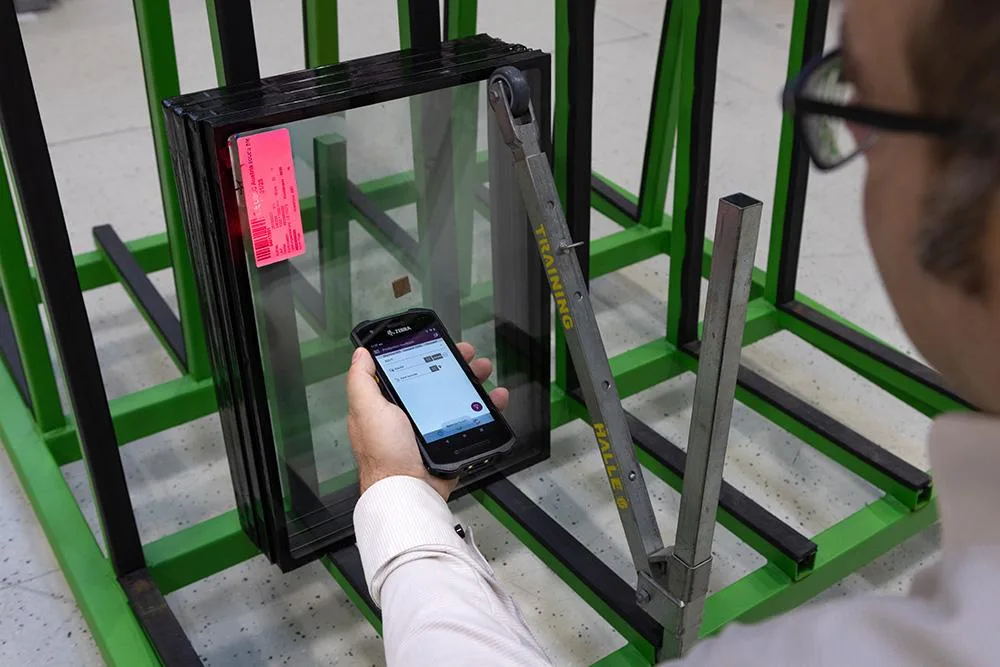
When a defect does surface, that digital identity changes everything. Instead of quarantining a whole day’s output, teams can isolate the exact batch, machine, or shift involved and act with confidence. We saw this firsthand when we rebuilt the production database for a commercial window manufacturer, where tracing a unit back to its source was the difference between a quick correction and an expensive guessing game.
Traceability has stopped being a nice-to-have. In a market where a single field failure can put an entire contract at risk, being able to answer “what happened, and where else could it happen?” in minutes is a real competitive advantage.
How Does ERP Connect CNC Fabrication to the Plant?
Today’s CNC equipment generates a constant stream of production data: cut times, material consumption, machine status, cutting accuracy. Without ERP, most of that stays trapped inside individual machines. Connect the two, and the shop floor starts talking back in real time.
Optimized jobs are released straight to the machines, utilization and accuracy are tracked automatically, and the ERP compares estimated output against what actually happened. Instead of chasing operators for manual updates, planners work from live numbers, and estimating gets sharper with every job.
Automation Replaces the Paper Trail
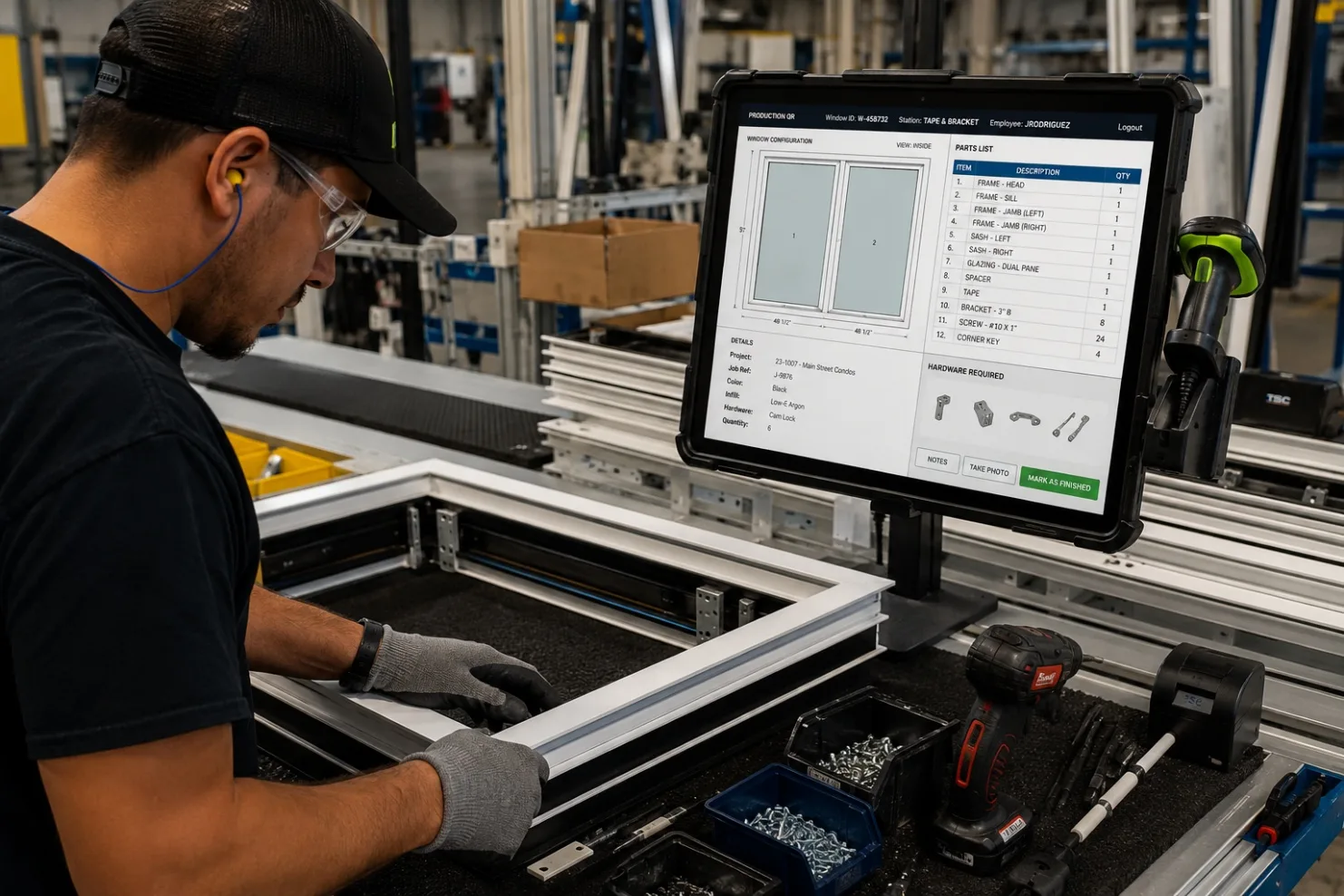
For years, manufacturing ran on paper: printed travelers, handwritten inspection sheets, manual shipping documents, and filing cabinets full of job records. Every one of those documents was another chance for something to get lost, delayed, or copied down wrong.
| The paper way | The ERP-connected way |
|---|---|
| Printed production travelers on the floor | Live job data on a shop-floor terminal |
| Handwritten inspection sheets, filed and forgotten | Digital QA/QC records tied to each unit |
| Manual shipping paperwork | Automated bills of lading and packing slips |
| Filing cabinets you hope no one needs | Full history searchable in seconds |
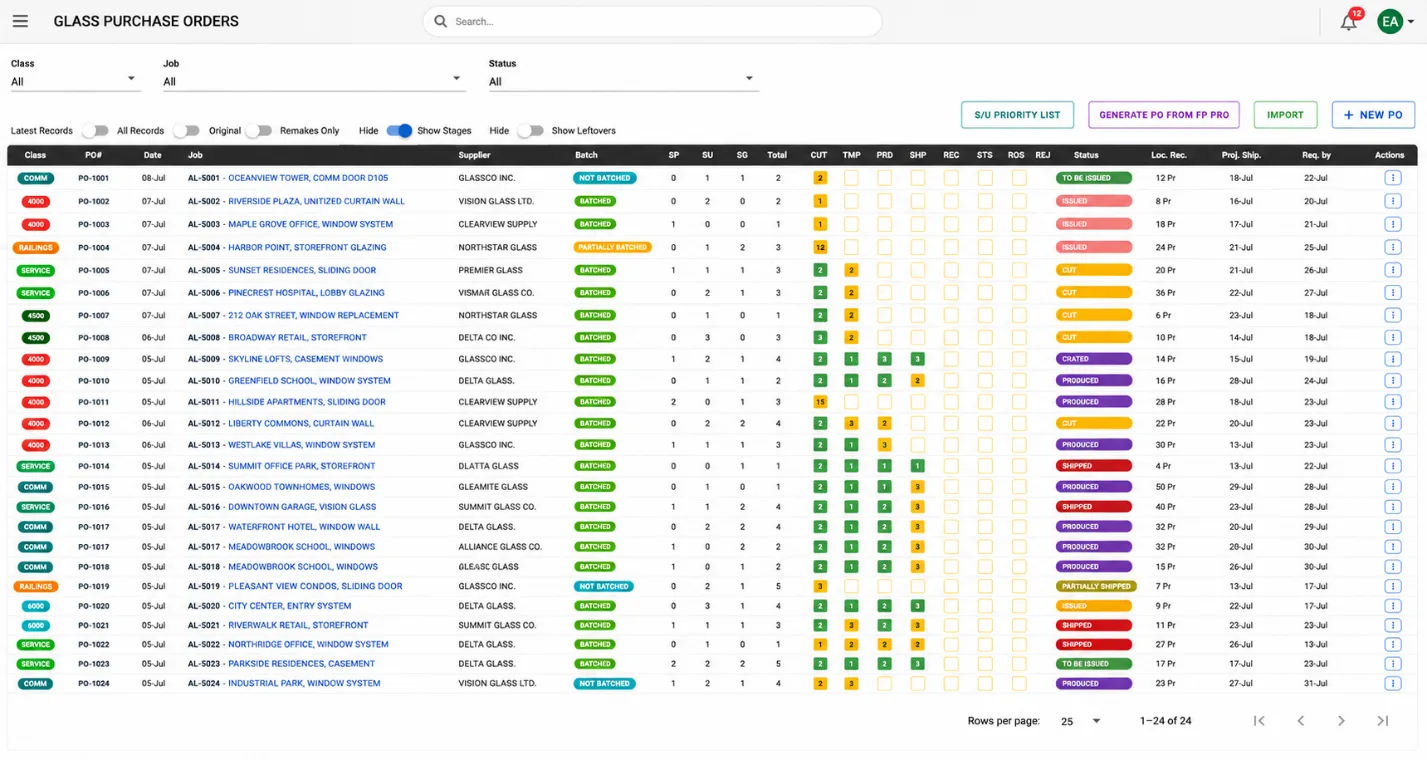
Digitizing those workflows does more than tidy up the front office. It removes the small daily errors, a transposed dimension here, a missed revision there, that quietly eat into margins and show up as rework weeks later.
How Does ERP Handle RFIs and Change Requests?
RFI (Request for Information)
A formal question raised during a project, usually by a contractor, to clarify a drawing, spec, or site condition before work continues. On a live job, RFIs pile up fast, and each one can change what the shop is supposed to build.
No construction project stays exactly as drawn. Architects revise, consultants issue clarifications, owners request modifications, and contractors submit RFIs faster than anyone would like. Without a central system, those updates scatter across emails, phone calls, spreadsheets, and marked-up PDFs, and the shop floor ends up building from yesterday’s information. The consequences are predictable and expensive: incorrect fabrication, rework, wasted material, missed deadlines, and the occasional warranty claim.
ERP pulls every revision into one controlled workflow. RFIs are logged, drawings are version-controlled, and approved changes flow straight to production. The team always manufactures from the latest sign-off, which quietly eliminates one of the most common and costly sources of error in the business.
Incident Reporting Creates Continuous Improvement
No operation is perfect. Machines fail, quality slips, glass gets damaged in transit, and safety incidents have to be documented properly. Historically, that meant a paper form that got filed away and rarely looked at again.
Modern incident modules let a team log an issue the moment it happens, attach photos, tie it to the affected batch, assign a corrective action, and track it through to resolution. Do that consistently and the patterns start to surface. Over time, the problems you used to react to become problems you design out, and every incident turns into a small improvement rather than a repeat.
Data-Driven Decisions Replace Guesswork
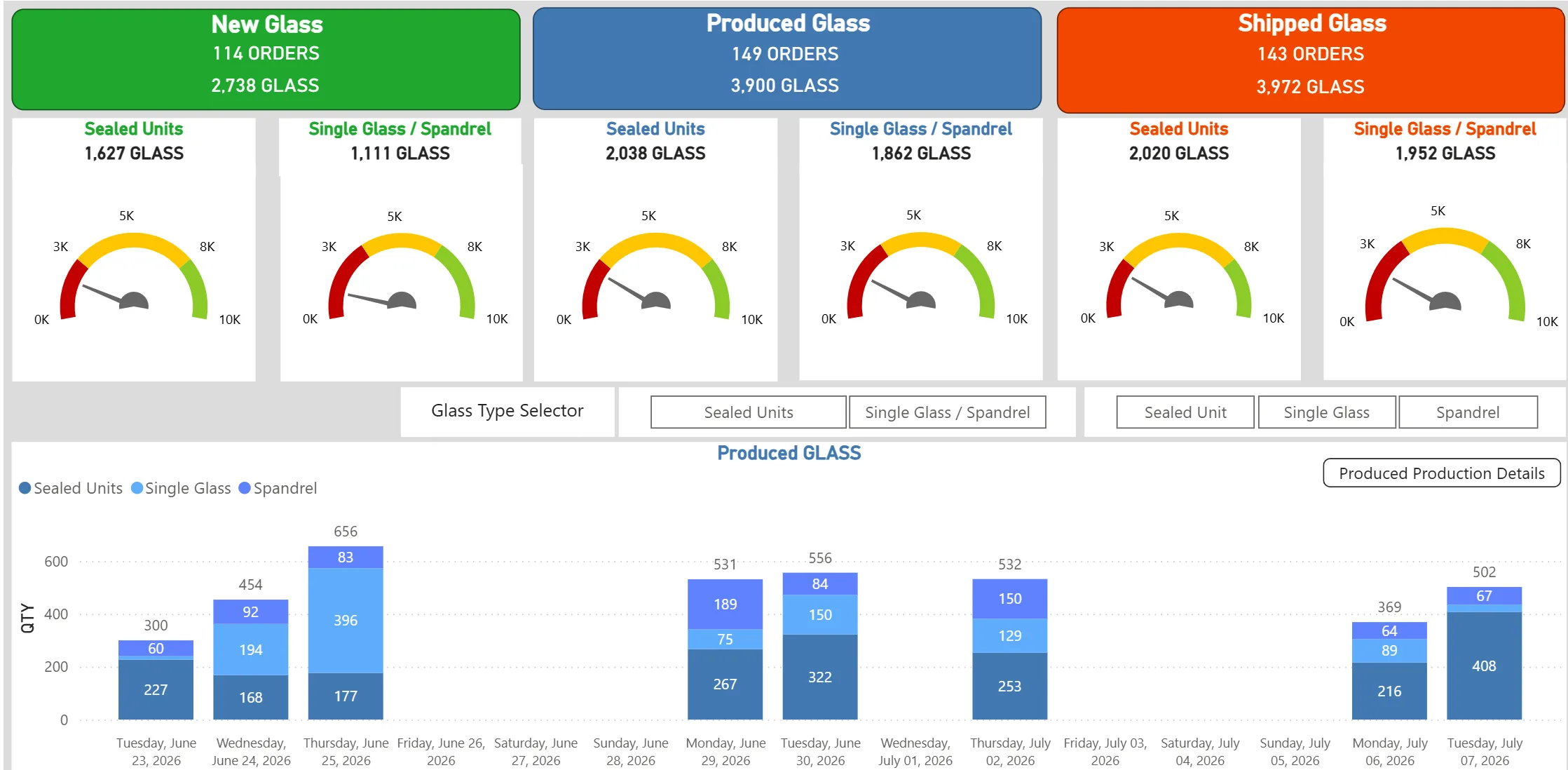
One of ERP’s quieter strengths is turning day-to-day operations into something you can actually steer. Production efficiency, machine downtime, labour productivity, on-time delivery, quality trends, inventory turnover: it all becomes visible on live dashboards instead of landing in a report two weeks after it mattered. Executives stop waiting for month-end and start making calls based on what the factory is doing right now.
Start with the two or three numbers that actually drive your business, on-time delivery and glass breakage are common ones, and build the dashboards around those before trying to measure everything. A focused business intelligence dashboard that people check daily beats a sprawling one nobody opens.
Building Customer Confidence Through Transparency
Customers today expect more than a quality product. They expect visibility. When a client asks where their order stands, “let me look into it and get back to you” is a weak answer. ERP lets you give them real-time project status, shipment tracking, and documentation on the spot. That kind of transparency builds trust, strengthens the relationship, and, in a crowded market, quietly wins the next contract.
How Does ERP Integrate With Glass Lines Like Bottero and Forel?
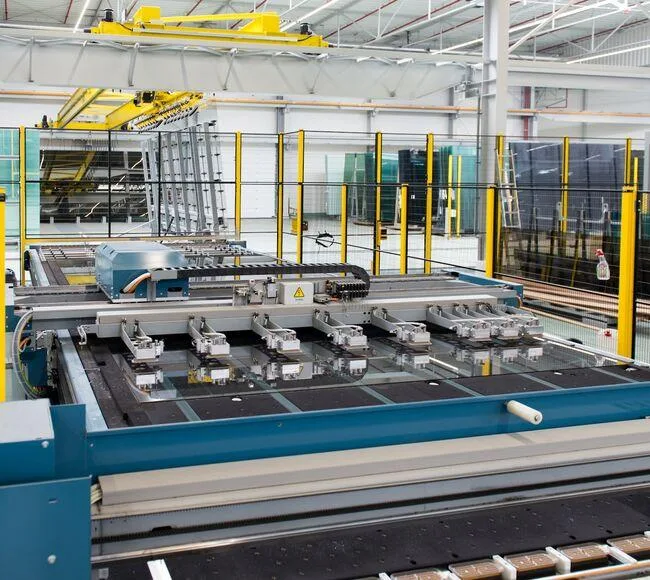
ERP used to stop at inventory, scheduling, and order management. That boundary is disappearing fast. Insulating glass units move through cutting, edge processing, tempering, and assembly, and each stage generates data worth capturing. By integrating ERP directly with industry equipment such as Bottero cutting tables and Forel glass lines, manufacturers finally close the loop between the office and the floor.
When an order is released, the ERP generates the cutting jobs and optimization data automatically. As each lite moves down the line, the machines report back in real time:
- Glass cutting completion, throughput, and material yield
- Scrap and breakage reporting
- Production timestamps and quality inspection results
- Insulating glass assembly status and finished inventory
- Shipment readiness
That two-way link turns ERP from a planning tool into a real-time manufacturing execution platform, and it sharpens traceability even further, since every finished unit ties back to its source glass, machine, and operator. Pulling this off usually takes some custom software and integration work to get the machines and the ERP speaking the same language, but for teams chasing Industry 4.0, this is where it stops being a slogan and starts being measurable.
The Future of Fenestration Is Fully Connected
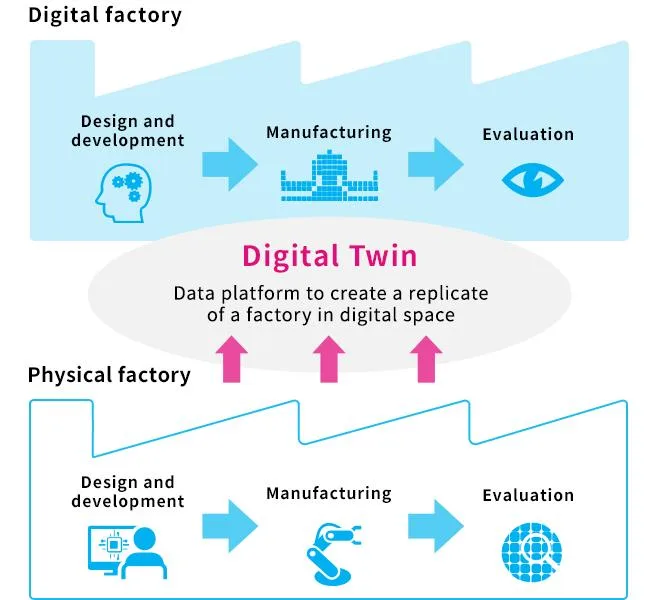
Automation, robotics, IoT, and AI will keep reshaping the factory floor. Through all of it, ERP is the platform that holds the pieces together, linking sales to engineering, engineering to production, production to quality, quality to logistics, and logistics to installation. In the end, it connects the manufacturer to the customer.
The goal was never just better windows. It is smarter windows, with full traceability, integrated fabrication, and complete visibility from raw material to installed product. For the modern fenestration business, ERP has stopped being back-office software and become the foundation for delivering quality and accountability, one window at a time.
- ERP gives every window a complete digital history, so traceability goes from a days-long hunt to a few seconds.
- Connecting CNC equipment and glass lines like Bottero and Forel turns ERP into a real-time execution platform, not just a planner.
- Digitized RFIs, change control, and incident reporting remove the most common and costly sources of rework.
- Live dashboards replace month-end guesswork, and real-time visibility becomes something customers can feel.
If you are weighing what a connected system could do for your plant, our team can help you map it out. Take a look at the BALANCED+ ERP platform, or talk to us about your business systems and where the biggest wins are hiding.

 Adrian Carmichael